
Blood in the White of the Eye: When It Is Harmless, and When It Is Not

Dr. Nikhil Nasta
4 min read
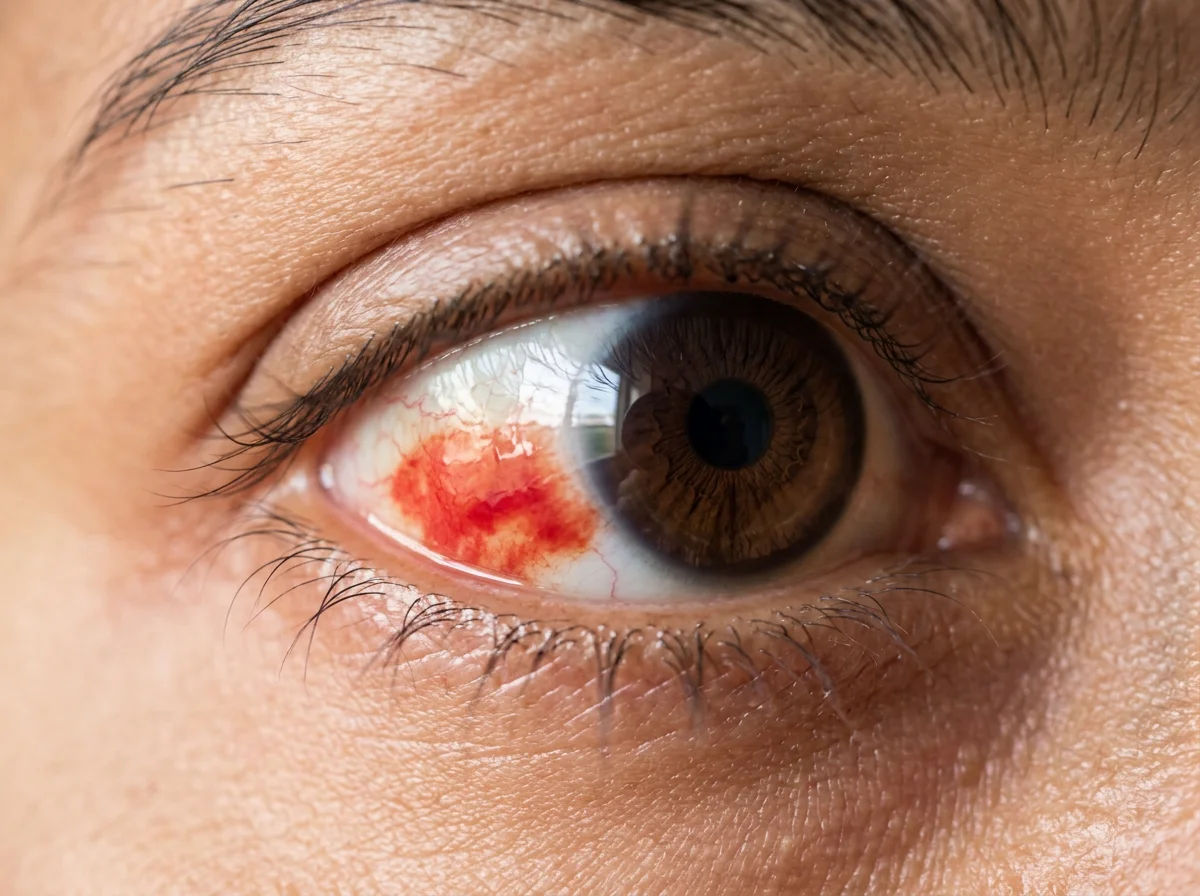
A painless, bright red patch on the white of the eye, with vision unchanged, is usually a subconjunctival haemorrhage: a tiny surface vessel has leaked under the clear skin of the eye. It looks as if the eye is bleeding out. The blood is trapped, not running into the sight. Most of these clear in one to two weeks, the way a bruise fades, often turning yellow at the edge before they go. Pain, a blow to the eye, blurred vision, or blood that sits over the coloured part of the eye is not this harmless version.
A painless bright red patch, with normal vision, is usually a surface bruise and fades over a couple of weeks. Please don’t rub it, and don’t stop a blood thinner on your own. Pain, an injury, or blurred sight needs to be seen the same day.
What Set It Off
| Situation | How seriously to take the red patch |
|---|---|
| Cough, sneeze, vomiting, straining, a hard rub | Classic trigger. If the eye sees normally and is comfortable, it can be watched |
| Blood thinner, aspirin, or a bleeding tendency | Still often benign on the eye, but tell the prescribing doctor if they keep happening. Do not stop the medicine on your own |
| High blood pressure you have not checked in a year | The eye patch is a reason to measure the pressure, not proof the pressure is high |
| Contact lens, pain, light hurts, vision down | Same-day exam. This may be an ulcer or a deeper injury, not a surface bruise |
| Hit by a ball, a cracker, a fist, or a fall | Same-day exam even if the red area looks like “only a patch.” The front of the eye can be damaged behind it |
What to Do This Week
- Leave it alone. Do not press, massage, or try to rinse the blood away.
- Artificial tears are reasonable if the surface feels scratchy. They do not speed the blood up by much. They do stop you rubbing.
- Skip kajal and contact lenses until the red has faded and the eye feels normal.
- Photograph it on day one. If it is clearly larger the next day, or a second patch appears, get it seen.
- Expect the colour to go from red to brown to yellow. A patch that is still spreading after 48 hours, or that has not begun to clear by two weeks, should be examined.
Blood That Is Not a Surface Bruise
Blood floating in the front chamber of the eye, a hyphema, usually follows a blow. The eye aches, vision drops, and the blood may level out over the coloured iris. That is an emergency, because pressure inside the eye can rise. Blood inside the cavity of the eye, a vitreous haemorrhage, is seen as a sudden cloud of floaters or a drop in vision, not as a red patch on the white. Diabetes and a retinal tear are reasons that happens.
Recurrent surface bleeds, bleeds on both eyes without a strain, or easy bruising on the skin are a reason to look at blood pressure and, with your physician, at clotting. The eye doctor should not be the person who tells you to stop a heart medicine.
A red eye that hurts: When Is Red Eye An Emergency
Brown spots, which are not blood: Black Spot On White Of Eye
Book: Consult
Want our latest updates?
Add iSight Eye Care as a preferred source on Google to see our newest articles in your Top Stories and AI Overviews.
Dr. Nikhil Nasta
Dr. Nikhil Nasta is the Founder & Lead Surgeon at iSight Eye Care. With over two decades of experience, he specializes in advanced cataract surgery and comprehensive eye care, dedicated to restoring vision and improving patients' quality of life.
Frequently Asked Questions
Most fade over one to two weeks. Larger patches can take a little longer. They often yellow before they disappear. Vision should stay normal throughout.

Schedule a visit
Book an appointment with Dr. Nikhil Nasta
Khar & Dadar · NABH accredited
Disclaimer: This information is for educational purposes only. Individual cases vary; consult a specialist for personalized advice.