
Dry Eye Treatment Mumbai: Symptoms, IPL & Relief
Introduction
- Office professionals
- Screen heavy users
- Contact lens wearers
- Post LASIK patients
- People living in polluted cities
- Individuals with allergies or thyroid issues
What Is Dry Eye Disease?
- Your eyes do not produce enough tears
- Your tears evaporate too quickly
Symptoms of Dry Eye
- Burning sensation
- Gritty feeling or sand-like sensation
- Eye fatigue
- Watering tears
- Redness
- Blurred vision that improves after blinking
- Difficulty wearing contact lenses
- Stringy mucus
- Sensitivity to light
- Eye heaviness or pressure
- Headache around the eyes
Why Is Dry Eye Increasing Today?
- Excess screen time
- Reduced blink rate during computer use
- Air conditioning and dry environments
- Pollution
- Increased contact lens use
- Hormonal changes
- Autoimmune disorders
- Post-LASIK dryness
- Allergies and long-term antihistamine use
Types of Dry Eye
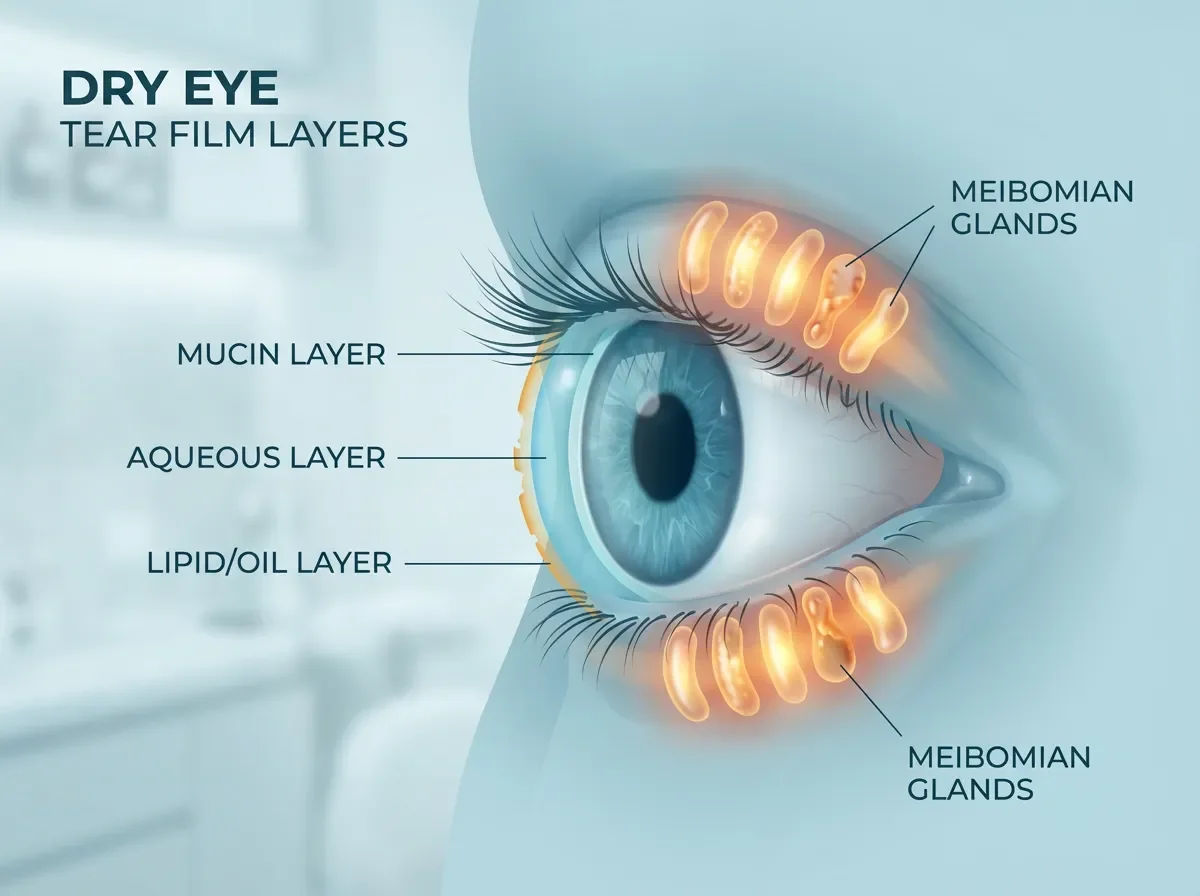
- Aqueous Deficient Dry Eye: Tear glands do not produce enough tears.
- Evaporative Dry Eye: Tears evaporate too fast due to weak oil glands (meibomian glands). This is the MOST common type today.
- Mixed Dry Eye: Combination of both.
Link Between Dry Eye and Screen Use
- Blurred vision
- Eye strain
- Redness
- Difficulty focusing
- Headaches
How Dry Eye Is Diagnosed
- Tear breakup time: Measures tear film stability.
- Meibomian gland analysis: Assesses the oil glands through imaging.
- Schirmer’s test: Measures tear quantity.
- Corneal staining: Checks for surface damage.
- Eyelid margin evaluation: Identifies blepharitis or blockage.
Dry Eye and Aesthetics: The Missing Link
- Under eye fillers
- Botox
- Skin boosters
- Blepharoplasty
Advanced Treatments for Dry Eye
- Prescription Lubricants: Medical grade drops stabilise the tear film and reduce inflammation.
- Anti-Inflammatory Drops: Used for chronic inflammation affecting tear production.
- Warm Compress and Eyelid Hygiene: Helps open oil glands and reduce bacterial load.
- Omega 3 Supplementation: Improves the oil layer of the tear film.
IPL Therapy for Dry Eye
- Warming and liquefying blocked oil glands
- Reducing inflammation
- Killing harmful bacteria
- Improving overall tear quality
- Reducing evaporation
- Meibomian gland dysfunction
- Evaporative dry eye
- Screen-related dry eye
- Rosacea-related eyelid inflammation
Dry Eye in LASIK and ICL Patients
- LASIK Surgery
- Contoura Vision
- ICL Surgery
Dry Eye After Cataract Surgery
Lifestyle Tips for Dry Eye Relief
- Follow the 20-second blink break rule every 20 minutes
- Use humidifiers in dry rooms
- Reduce fan or AC airflow to the face
- Stay hydrated
- Wear blue light protection lenses for heavy screen use
- Avoid overwashing your eyes
- Use medical grade lubricants regularly
Conclusion
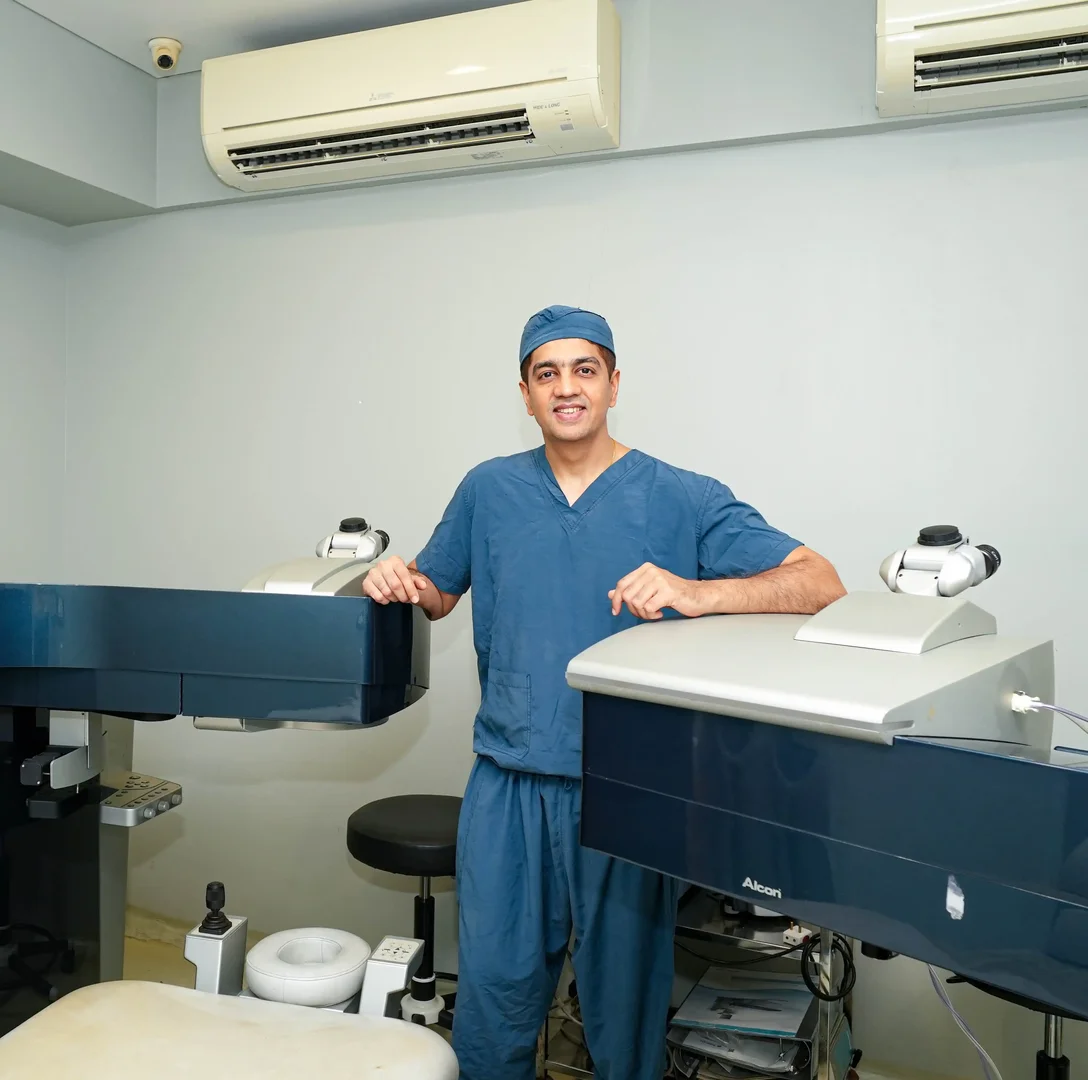
Dr. Nikhil Nasta
Dr. Nikhil Nasta is the Founder & Lead Surgeon at iSight Eye Care. With over two decades of experience, he specializes in advanced cataract surgery and comprehensive eye care, dedicated to restoring vision and improving patients' quality of life.
Related articles
Dry Eye Home Treatment: Doctor-Approved Remedies
Mild cases of dry eye improve significantly with simple home remedies. Learn about doctor-approved treatments that actually work.
IPL & Morpheus Dry Eye Treatment in Mumbai
Discover IPL & Morpheus for dry eye at I-Sight Eye Care. Long-lasting comfort by treating the root cause with advanced therapies.
Is Dry Eye Dangerous?
Dry eye can become dangerous if left untreated, leading to corneal damage, infections, inflammation, and vision disturbances. Learn about the risks.
Best Eye Drops for Dry Eyes in India 2026 – Doctor's Top Picks
Ophthalmologist-recommended dry eye drops in India: preservative-free picks, typical OTC price bands (~₹200–₹800+), and brands like Refresh, Systane & Hylo—how to choose by symptom.
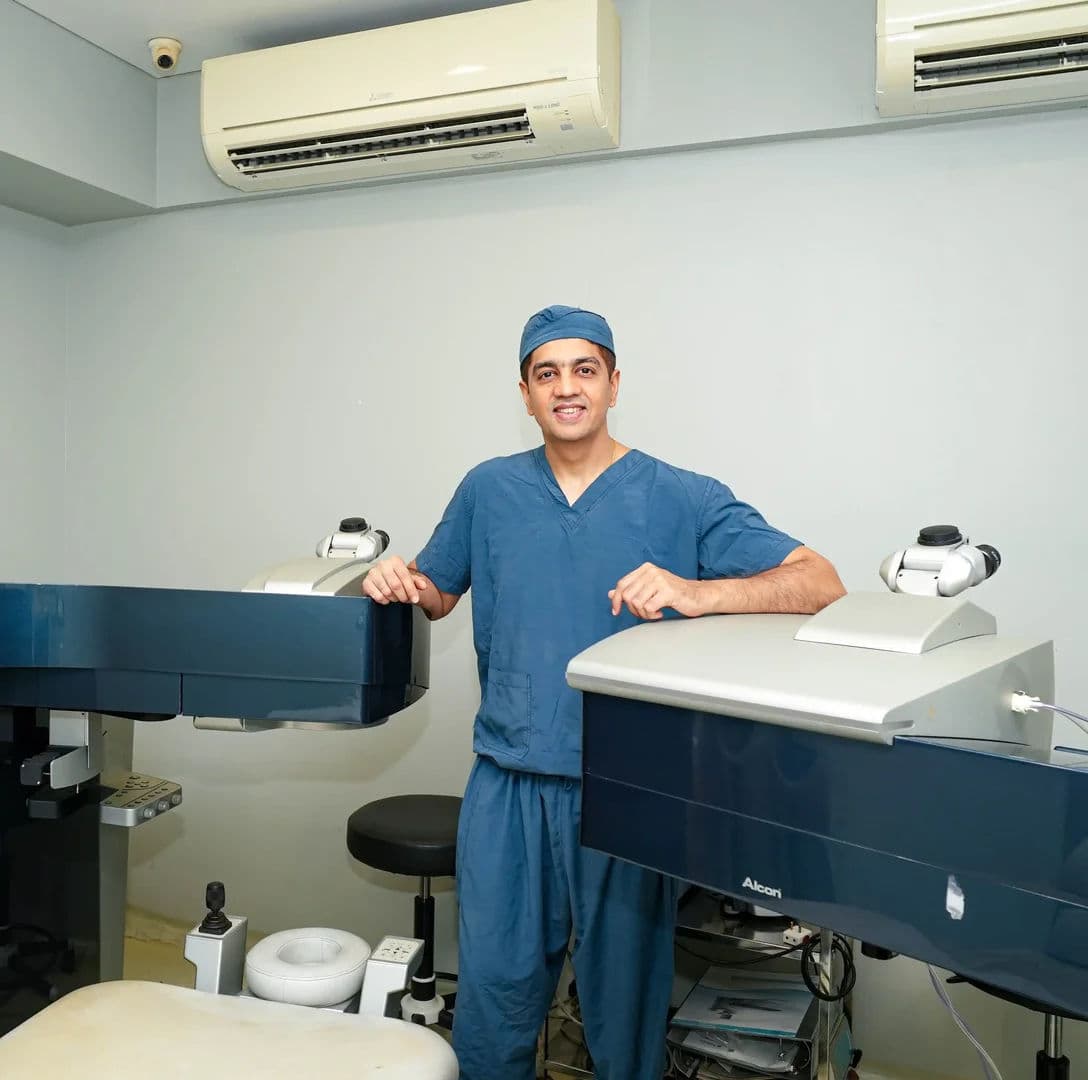
Book an appointment with Dr. Nikhil Nasta
Khar & Dadar · NABH accredited
Disclaimer: This information is for educational purposes only. Individual cases vary; consult a specialist for personalized advice.