
EDOF IOL vs Trifocal IOL: Which Is Better After Cataract Surgery?

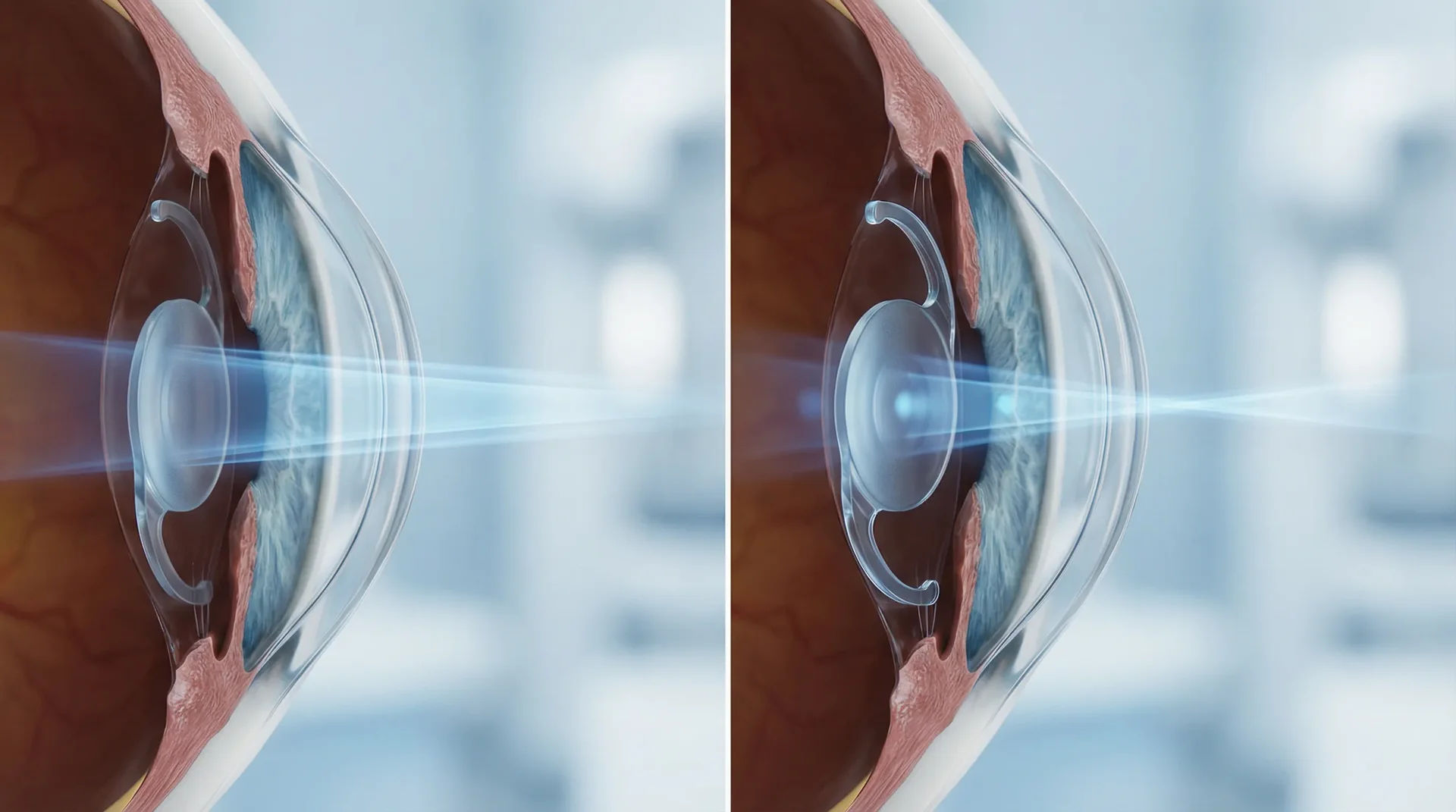
How Trifocal IOLs Work
- Distance
- Intermediate
- Near
How EDOF IOLs Work
- Continuous distance to intermediate vision
- Functional near vision
- Minimal light loss
EDOF IOL vs Trifocal IOL: Detailed Comparison
1. Quality of Vision
- Sharper, more stable vision
- Better contrast sensitivity
- Clearer vision in low-light settings
- Good vision at all distances
- Slight reduction in contrast
- Some compromise in dim lighting
2. Night Driving and Low-Light Performance
- Minimal glare and halos
- Better night driving confidence
- Safer for frequent drivers
- Higher chance of halos and starbursts
- Night driving discomfort in some patients
3. Near Vision and Reading
- Functional near vision
- Glasses may be needed for fine print
- Excellent near vision
- Greater spectacle independence
4. Screen Use and Office Work
- Excellent intermediate vision
- Ideal for laptops, mobiles, dashboards
- Intermediate vision present
- Some patients experience visual fatigue
5. Visual Side Effects
- Low incidence of glare
- Fewer halos
- Less neuroadaptation stress
- Higher glare and halo incidence
- Longer adaptation period
6. Suitability in Mild Eye Conditions
- Mild dry eye
- Early macular changes
- Minor corneal irregularities
7. Adaptation Period
- Faster adaptation
- Vision feels more natural
- Longer neuroadaptation
- Brain must learn to ignore unwanted images
EDOF IOL May Be Better If You:
- Drive frequently at night
- Work long hours on screens
- Want visual comfort over total spectacle freedom
- Are sensitive to glare or halos
Trifocal IOL May Be Better If You:
- Want minimal dependence on glasses
- Read a lot of fine print
- Accept glare risk
- Have excellent eye health
How Dr. Nikhil Nasta Chooses the Right Lens
- Lifestyle analysis
- Occupation assessment
- Night driving habits
- Screen exposure
- Corneal and retinal evaluation
- Patient expectation counselling
Want our latest updates?
Add iSight Eye Care as a preferred source on Google to see our newest articles in your Top Stories and AI Overviews.
Dr. Nikhil Nasta
Dr. Nikhil Nasta is the Founder & Lead Surgeon at iSight Eye Care. With over two decades of experience, he specializes in advanced cataract surgery and comprehensive eye care, dedicated to restoring vision and improving patients' quality of life.
Related articles
Top Advantages of EDOF IOL Over Multifocal Lenses
According to Dr. Nikhil Nasta of I-Sight Eye Care, Mumbai, EDOF intraocular lenses offer smoother vision, fewer visual disturbances, and better contrast.
Do EDOF Lenses Cause Halos or Glare at Night?
According to Dr. Nikhil Nasta of I-Sight Eye Care, EDOF lenses may cause mild halos or glare in some patients, but significantly less than multifocal lenses.
EDOF IOL Surgery in Mumbai
EDOF IOLs represent one of the most advanced solutions for people who want a smooth range of vision without the typical halos associated with older multifocal designs.
Advantages of EDOF IOL Lenses
Extended depth of focus lenses known as EDOF IOLs are one of the most significant advances in modern cataract surgery. Learn about their advantages.
Frequently Asked Questions

Book an appointment with Dr. Nikhil Nasta
Khar & Dadar · NABH accredited
Disclaimer: This information is for educational purposes only. Individual cases vary; consult a specialist for personalized advice.