
LASIK vs SMILE vs SILK vs Contoura: Which Eye Surgery is Right for You in Mumbai?
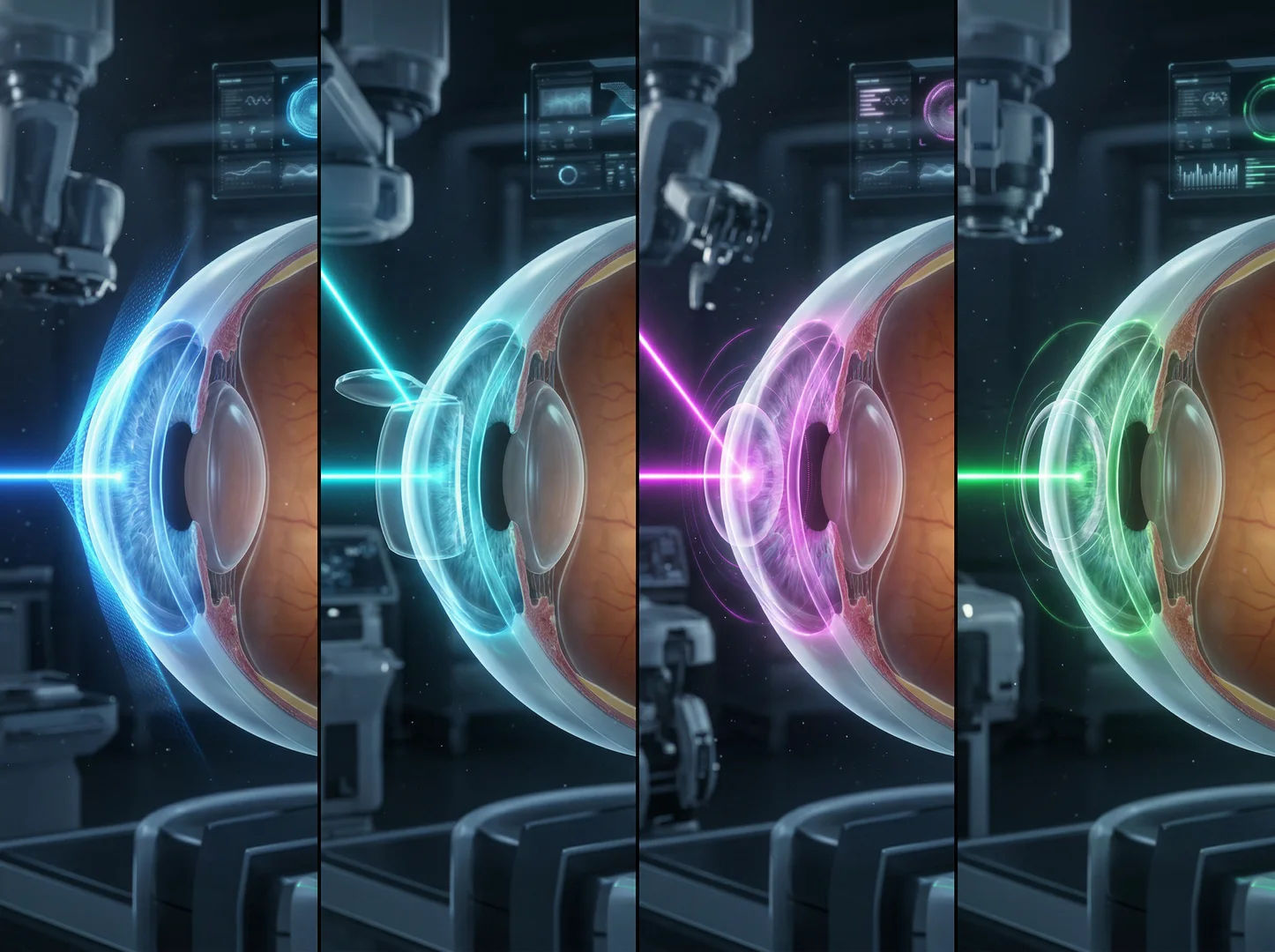
All Four Are Laser Vision Correction: Here Is How They Differ
Full Comparison: LASIK vs SMILE vs SILK vs Contoura (Mumbai, 2026)
| Procedure | How It Works | Flap? | Recovery | Best For | Approx. Cost per Eye (₹) |
|---|---|---|---|---|---|
| Standard LASIK | Blade creates corneal flap; excimer laser reshapes stroma; flap replaced | Yes (blade) | Vision stable within 24–48 hrs; full stabilisation 1 month | Moderate myopia/hyperopia, adequate corneal thickness, cost-sensitive patients | 20,000 – 40,000 |
| Bladeless / Femto-LASIK | Femtosecond laser creates flap (no blade); excimer laser reshapes stroma | Yes (laser) | 24–48 hrs for functional vision; full stabilisation 1 month | Patients wanting higher precision flap, slightly thinner corneas | 40,000 – 65,000 |
| Contoura / Topography-Guided LASIK | Corneal topography map personalises excimer laser treatment; femtosecond flap | Yes (laser) | Similar to bladeless LASIK; often superior quality of vision | Irregular corneas, higher prescriptions, night vision concerns, quality-of-vision priority | 55,000 – 80,000 |
| SMILE LASIK | Femtosecond laser creates lenticule inside cornea; extracted through small keyhole (no flap) | No (flapless) | Slightly slower initial clarity; full stabilisation 4–6 weeks | High myopia (up to -10D), active lifestyle, dry-eye-prone patients | 60,000 – 90,000 |
| SILK LASIK | Next-generation solid-state laser creates lenticule flaplessly using continuous beam technology | No (flapless) | Early vision stability comparable to SMILE; ongoing clinical data | Patients wanting the newest flapless platform, myopia up to certain range | 70,000 – 1,10,000 |
Standard LASIK: The Most Established Procedure
Bladeless LASIK (Femto-LASIK): Higher Precision Flap
Contoura / Topography-Guided LASIK: Personalised to Your Cornea
SMILE LASIK: Flapless, Keyhole Extraction
SILK LASIK: The Newest Flapless Platform
Which Procedure Is Right for You? A Decision Framework
- High myopia (above -6D to -10D): SMILE or SILK, flapless procedures handle higher prescriptions with better biomechanical outcomes
- Dry eyes or dry-eye risk: SMILE or SILK, lower corneal nerve disruption reduces post-op dryness
- Active lifestyle / contact sports: SMILE or SILK, no flap means no flap-dislodgement risk from impact
- Night vision concerns or irregular cornea: Contoura topography-guided LASIK, personalised treatment delivers better quality of vision
- Moderate myopia or hyperopia, adequate corneas, cost-sensitive: Bladeless LASIK or Standard LASIK
- Priority: the latest technology available in Mumbai: SILK (with the understanding that it has a shorter outcome record)
- Thin corneas: Discuss carefully with your surgeon, minimum residual stromal bed requirements differ slightly by procedure
Who Is NOT a Candidate for Any of These Procedures?
- Corneal thickness below safe minimum for the chosen procedure
- Keratoconus or forme fruste keratoconus (irregular corneal thinning), this is a disqualifying condition
- Uncontrolled dry eye disease that does not respond to treatment
- Unstable prescription, vision must have been stable for at least one year
- Pregnant or breastfeeding at time of surgery
- Certain autoimmune conditions affecting corneal healing
- Age under 18 (typically, final assessment is always clinical)
How to Find Out Which Procedure You Are Eligible For in Mumbai
Want our latest updates?
Add iSight Eye Care as a preferred source on Google to see our newest articles in your Top Stories and AI Overviews.
Dr. Nikhil Nasta
Dr. Nikhil Nasta is the Founder & Lead Surgeon at iSight Eye Care. With over two decades of experience, he specializes in advanced cataract surgery and comprehensive eye care, dedicated to restoring vision and improving patients' quality of life.
Related articles
Contoura Vision vs SMILE: Which Is Better for You?
Contoura (topography-guided LASIK) vs SMILE (flapless): compare optics, dry eye risk, prescription range, recovery, and which Mumbai patients commonly choose - and why.
SMILE LASIK Surgery in Mumbai: Is It Better Than Standard LASIK?
SMILE LASIK Mumbai guide comparing flapless SMILE with standard and femto LASIK, including candidacy, recovery, expected outcomes, and pricing.
LASIK vs SMILE vs PRK: Which Vision Correction Is Best for You?
Compare LASIK, SMILE, and PRK by candidacy, recovery speed, comfort, and long-term outcomes to choose the safest procedure for your eyes.
Frequently Asked Questions
Book an appointment with Dr. Nikhil Nasta
Khar & Dadar · NABH accredited
Disclaimer: This information is for educational purposes only. Individual cases vary; consult a specialist for personalized advice.