
Ophthalmologist vs Optometrist in Mumbai: Which Eye Doctor Do You Need?
Dr. Nikhil Nasta
5 min read
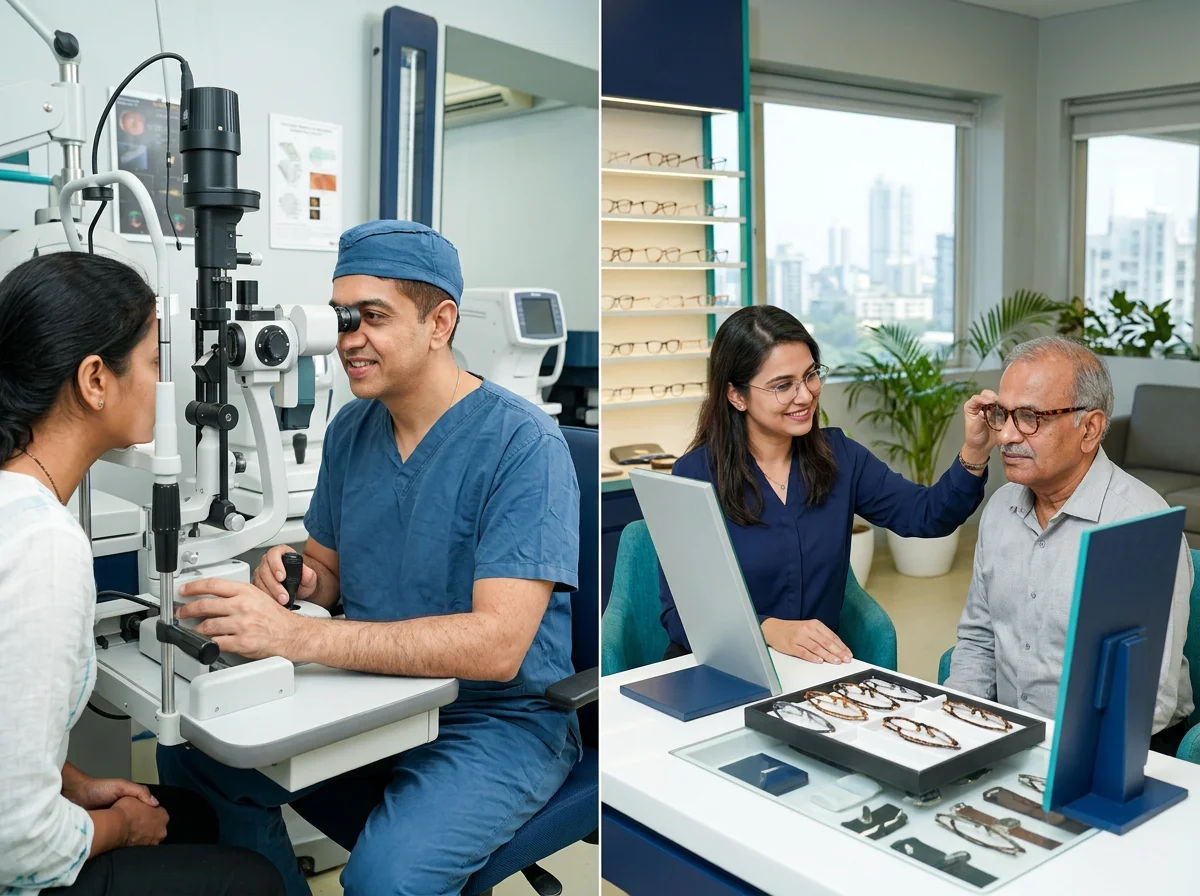
When people search for an "eye doctor in Mumbai", they often end up at the wrong type of professional - paying for a glasses check when they needed a medical diagnosis, or waiting weeks for a specialist when an optometrist could have helped same-day. There are three distinct eye-care professionals in India: the ophthalmologist, the optometrist, and the optician. Knowing exactly what each one can (and cannot) do saves you time, money, and sometimes your vision.
The Quick Answer
| Ophthalmologist | Optometrist | Optician | |
|---|---|---|---|
| What they are | A medical doctor specialising in eyes | A primary eye-care professional | A technician |
| Training | MBBS + MS/MD Ophthalmology (+ fellowship) | Bachelor/Diploma in Optometry | Technical/dispensing training |
| Eye tests & glasses prescriptions | Yes | Yes | No |
| Diagnose eye disease | Yes | Screen & refer | No |
| Prescribe medicines | Yes | No (limited, by setting) | No |
| Perform surgery / laser | Yes | No | No |
| Fit & dispense glasses/lenses | Via clinic | Yes | Yes |
In one line: see an optometrist for vision testing and glasses; see an ophthalmologist for eye disease, pain, sudden changes, or surgery.
What Does an Ophthalmologist Do?
An ophthalmologist is a fully qualified medical doctor (MBBS followed by a postgraduate MS or MD in Ophthalmology) who diagnoses and treats the entire range of eye conditions - medically and surgically. Many then complete a fellowship to sub-specialise. An ophthalmologist can:
- Diagnose and treat eye diseases (glaucoma, cataract, diabetic retinopathy, infections, dry eye disease)
- Prescribe medications, eye drops, and treatments
- Perform surgery and laser procedures (cataract, LASIK/SMILE, retina, glaucoma, oculoplasty)
- Manage eye complications of systemic conditions like diabetes and hypertension
- Provide complete eye examinations and prescribe glasses
See an ophthalmologist for: any eye pain or redness that won't settle, sudden vision changes, floaters or flashes, diabetes-related eye screening, suspected cataract or glaucoma, or any surgical question.
What Does an Optometrist Do?
An optometrist is a primary eye-care professional trained in vision testing and eye health screening. They are often your first point of contact for vision concerns. An optometrist can:
- Perform refraction and prescribe glasses and contact lenses
- Assess and fit contact lenses
- Screen for common eye conditions and refer to an ophthalmologist when needed
- Help manage some non-surgical vision issues and visual strain
What an optometrist does not do: perform surgery, and (in most settings) prescribe medical treatment for eye disease. If your optometrist spots something concerning, they will refer you to an ophthalmologist. See an optometrist for a routine vision check, new or updated glasses, contact lens fitting, or general eye strain from screens.
What About an Optician?
An optician is a technician who interprets prescriptions and fits, adjusts, and dispenses glasses and contact lenses. They do not test eyes, diagnose, or treat. Think of them as the people who turn your prescription into well-fitting eyewear.
A Simple Decision Guide
| Your situation | Start with |
|---|---|
| I need new glasses / a vision check | Optometrist |
| My glasses don't help anymore / vision is getting worse | Ophthalmologist |
| Red, painful, or sticky eye | Ophthalmologist |
| Sudden vision loss, floaters, or flashes | Ophthalmologist (urgent) |
| I have diabetes and need a retina check | Ophthalmologist |
| I want LASIK / SMILE / cataract surgery | Ophthalmologist (refractive/cataract) |
| I just need new frames from my prescription | Optician |
When unsure, an ophthalmologist consultation is the safest choice - they can do everything an optometrist does plus diagnose and treat disease.
Why This Matters in Mumbai
Mumbai has thousands of optical stores, many staffed by optometrists and opticians, alongside hospitals and specialist eye clinics with ophthalmologists. It's easy to get a quick "eye test" at an optical shop and assume your eyes are healthy - but a glasses test is not the same as a medical eye examination. Conditions like glaucoma and early diabetic retinopathy can be missed because they don't affect the glasses number. If you have any risk factors (diabetes, family history, age over 40, high power), make sure a medical examination by an ophthalmologist is part of your routine, not just a refraction.
Not Sure Who You Need? Start With a Consultation
If you're unsure whether you need a glasses check or a medical eye examination, the safest path is a comprehensive consultation with an ophthalmologist who can do both. At I-Sight Eye Care, Mumbai, led by Dr. Nikhil Nasta, you'll get a full assessment and clear guidance on exactly what your eyes need.
Book your consultation at Consult
Want our latest updates?
Add iSight Eye Care as a preferred source on Google to see our newest articles in your Top Stories and AI Overviews.
Dr. Nikhil Nasta
Dr. Nikhil Nasta is the Founder & Lead Surgeon at iSight Eye Care. With over two decades of experience, he specializes in advanced cataract surgery and comprehensive eye care, dedicated to restoring vision and improving patients' quality of life.
Frequently Asked Questions
They're not better or worse - they're different. An ophthalmologist is a medical doctor who can diagnose disease and perform surgery; an optometrist specialises in vision testing and prescribing glasses or lenses. For glasses, an optometrist is ideal; for eye disease or surgery, you need an ophthalmologist.

Schedule a visit
Book an appointment with Dr. Nikhil Nasta
Khar & Dadar · NABH accredited
Disclaimer: This information is for educational purposes only. Individual cases vary; consult a specialist for personalized advice.