Phaco Surgery in Mumbai: Complete Guide to Modern Micro Incision Cataract Removal
- Dr. Nikhil Nasta

- Dec 11, 2025
- 7 min read

Intro
Cataracts are one of the most common reasons for blurred, cloudy vision as we age. The good news is that modern eye surgery has made cataract removal a quick, precise and comfortable procedure.
The most widely used technique today is phaco surgery, also called phacoemulsification. It is a micro incision form of cataract surgery in Mumbai that uses ultrasound energy to break the cloudy lens and replace it with a clear artificial lens.
In this guide, you will understandwhat phaco surgery is,how the procedure is done step by step,the benefits compared to older techniques,who is a good candidate,recovery time and safety,and how it connects with premium lens options like EDOF, multifocal and trifocal IOLs.
What is Phaco Surgery
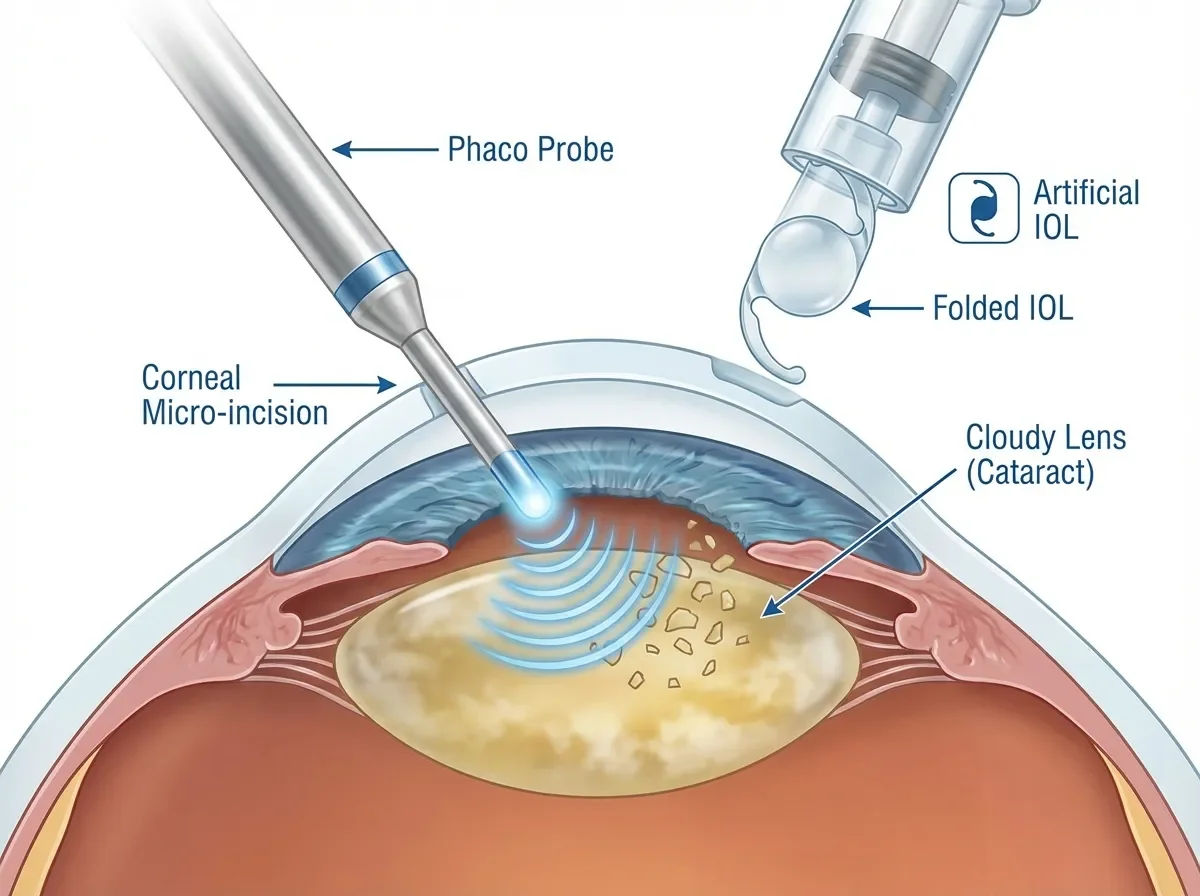
Phaco surgery is a modern micro incision technique for cataract removal. A very small opening is made in the clear front surface of the eye. Through this opening, a thin probe delivers ultrasound energy to soften and break the cataract into tiny fragments. These fragments are then vacuumed out and replaced with a clear intraocular lens.
Because the incision is so small, phaco is usually a no stitch cataract surgery. It is performed as a day care procedure and is now the standard approach for most patients undergoing cataract surgery in Mumbai.
How Phaco Surgery is Done: Step by Step
1. Eye preparation
You will be given numbing eye drops so that you are fully comfortable during the surgery.The area around the eye is cleaned and a small instrument keeps the eyelids gently open.
2. Micro incision
The surgeon creates a tiny self sealing incision at the edge of the cornea.This micro incision is usually about two to three millimeters.
3. Lens opening
A circular opening is made on the front surface of the cloudy natural lens.This allows access to the cataract inside.
4. Ultrasound phacoemulsification
A thin phaco probe is inserted through the micro incision.This probe uses ultrasound vibrations to break the hard cataract into soft, tiny pieces. At the same time, gentle suction removes the fragments.
5. Intraocular lens implantation
Once the cataract is removed, a clear artificial lens (IOL) is inserted.The lens is folded, passed through the tiny incision and opened inside the eye.Depending on your visual needs, this may be a monofocal, multifocal, EDOF or toric lens.
You can explore these premium lens options here
6. Self sealing closure
Because the incision is very small, it usually seals naturally without stitches. You go home the same day with protective instructions and eye drops.
Benefits of Phaco Surgery Compared to Older Cataract Techniques
Phaco surgery has become the gold standard for cataract removal for several reasons.
Smaller incision
The micro incision is far smaller than the cut used in older cataract methods.This means faster healing, less induced astigmatism and more comfort.
No stitches in most cases
The self sealing design of the wound avoids sutures, which also reduces irritation and speeds recovery.
Faster visual recovery
Most people notice clearer vision within one to two days after phaco.Vision continues to sharpen over the next few weeks.
High precision and safety
Phaco technology allows the surgeon to control energy and fluid inside the eye very precisely.This gives predictable results and excellent safety when performed by an experienced cataract surgeon.
Works well with premium IOLs
If you want freedom from glasses, phaco is ideal for implanting advanced lenses likeEDOF, multifocal, trifocal and toric lenses. You can read more on
Who is a Good Candidate for Phaco Surgery
You may be a candidate for phaco if you have
cloudy or blurred vision
difficulty reading, driving or working under bright lights
glare or halos around lights
frequent change in glasses prescription
reduced contrast or faded colours
Most age related cataracts can be managed with phacoemulsification.Even if you have conditions like diabetes or mild dry eye, phaco can usually be performed safely with proper care.
If your primary concern is dryness or irritation along with cataract, it is useful to address surface issues through dry eye treatment in Mumbai before and after surgery so that the final visual outcome is as sharp as possible.
Types of Intraocular Lenses Used with Phaco
One of the biggest advantages of modern phaco surgery is the wide choice of IOLs. The lens you choose decides how dependent you will be on glasses after surgery.
Monofocal IOL
Gives clear vision for one distance, usually far.You may still need glasses for reading or computer work.
Toric IOL
Corrects astigmatism along with cataract.Very useful if you had cylindrical power in your glasses before surgery.
Multifocal IOL
Gives vision for far, intermediate and near with reduced dependence on glasses. You can learn more about this here Multifocal IOL surgery in Mumbai.
EDOF IOL
Extended depth of focus lenses provide a smooth range of vision from far to intermediate, with fewer halos and glare compared to some multifocal designs.Details are available hereEDOF IOL surgery in Mumbai.
Trifocal IOL
Trifocal lenses are designed to give clear vision at far, intermediate and near distances and are an option for motivated patients who want maximum spectacle independence.Read more hereTrifocal IOL surgery in Mumbai.
Your surgeon will discuss which IOL fits best with your lifestyle, work demands and eye measurements.
Cost of Phaco Surgery in Mumbai
The total cost of phaco cataract surgery in Mumbai depends mainly on the type of lens chosen, the technology used and the hospital setup.
In general
Monofocal IOL packages are at the lower end
Toric IOL packages are slightly higher
EDOF, multifocal and trifocal IOL packages fall into the premium range
When comparing costs, always check what is includedpre operative testsconsultationslens typehospital chargespost operative visits.
You can see the broader list of treatments and services at Eye treatments at I Sight Eye Care.
Recovery After Phaco Surgery
Most patients are pleasantly surprised at how quick and comfortable recovery is.
First 24 to 48 hours
mild irritation, watering or foreign body sensation is common
light sensitivity is expected
vision is already clearer than before surgery but may still be slightly hazy
First week
vision becomes sharper day by day
you can usually resume light daily activities
avoid rubbing the eye, heavy lifting or splashing water directly into the eye
One month
the eye is usually fully healed
final glasses number, if needed, is checked
you can return to normal routine, exercise and outdoor activities as advised
If you had a premium lens like an EDOF or multifocal IOL, you may notice that your range of focus improves further as the brain adapts to the new optics.
Possible Risks and Complications
Phaco surgery is very safe when performed by an experienced surgeon, but like any eye surgery, it has some potential risks:
temporary corneal swelling
raised eye pressure in the early period
inflammation that needs eye drops
posterior capsule opacification in the months or years after surgery, which can be treated with a simple laser procedure
very rarely, infection inside the eye
Choosing a well equipped centre with experience in cataract, retina and corneal care such as those that offer retinal surgery or corneal transplant surgery adds an extra layer of safety if your eye has additional risk factors.
Phaco, Lasik and ICL: How They Relate
Patients often confuse cataract surgery with procedures like LASIK surgery in Mumbai or ICL surgery in Mumbai.
Phaco treats cataract by replacing the cloudy natural lens.
LASIK reshapes the cornea to correct glasses power in younger eyes without cataract.
ICL places a thin lens inside the eye, in front of the natural lens, for very high myopia or thin corneas.
In many ways, phaco with a premium IOL is like a permanent built in vision correction tailored to your cataract age. LASIK and ICL are more relevant earlier in life, which you can explore separately if you have high myopia or are seeking spectacle freedom.
Phaco and Ophthalmic Aesthetics
Many patients are concerned not only about clarity of vision but also about how their eyes look after surgery.For issues such as baggy eyelids, under eye hollows or wrinkles around the eyes, treatments in the domain of ophthalmic aesthetics and oculoplastic surgery may be considered.
You can read more on Oculoplastic surgery and Botox in Mumbai and Ocular aesthetics and skin type care.
These treatments are usually planned separately from cataract surgery but can greatly enhance overall eye appearance and confidence.
How to Choose the Right Phaco Surgeon in Mumbai
When choosing a surgeon for phaco cataract surgery, consider
experience and number of cataract surgeries performed
availability of advanced phaco machines and high quality IOLs
clear explanation of all lens options
honest counselling about expectations and risks
structured follow up and emergency support
You can view the team and specialists at I Sight Eye Care here I Sight Eye Care doctors.
For personalised guidance and to check if you are ready for phaco surgery, you can book a consultation at Consult I Sight Eye Care.
Conclusion
Phacoemulsification has transformed cataract surgery into a safe, precise and quick procedure with excellent visual outcomes. With micro incisions, minimal discomfort and a wide range of lens options, phaco offers clear, bright vision and the chance to reduce dependence on glasses.
If you have been noticing cloudy or blurred vision, glare from lights or difficulty with daily tasks, it may be time to evaluate your cataracts and discuss phaco surgery with a specialist.
FAQ's
What is phaco surgery?
Phaco surgery, or phacoemulsification, is a modern micro incision cataract procedure where ultrasound energy breaks the cloudy lens into tiny fragments that are removed and replaced with a clear intraocular lens.
Is phaco surgery painful?
No. The eye is numbed with anaesthetic drops. You may feel some pressure but should not feel pain during the procedure.
How long does it take to recover from phaco surgery?
Most patients notice clearer vision in one to two days. Complete healing usually takes about three to four weeks, after which final glasses, if needed, are prescribed.
What is the difference between phaco and LASIK?
Phaco treats cataract by removing the cloudy natural lens, while LASIK surgery in Mumbai reshapes the cornea to correct refractive errors in eyes without cataract.
Can I get a multifocal or EDOF lens with phaco?
Yes. Phaco is ideal for implanting premium lenses like multifocal, EDOF and trifocal IOLs that reduce dependence on glasses. You can read more about these options underEDOF IOL surgery and Multifocal IOL surgery.


Comments