
Phaco vs Traditional Cataract Surgery in Mumbai
Introduction
What is Traditional Cataract Surgery (SICS)?
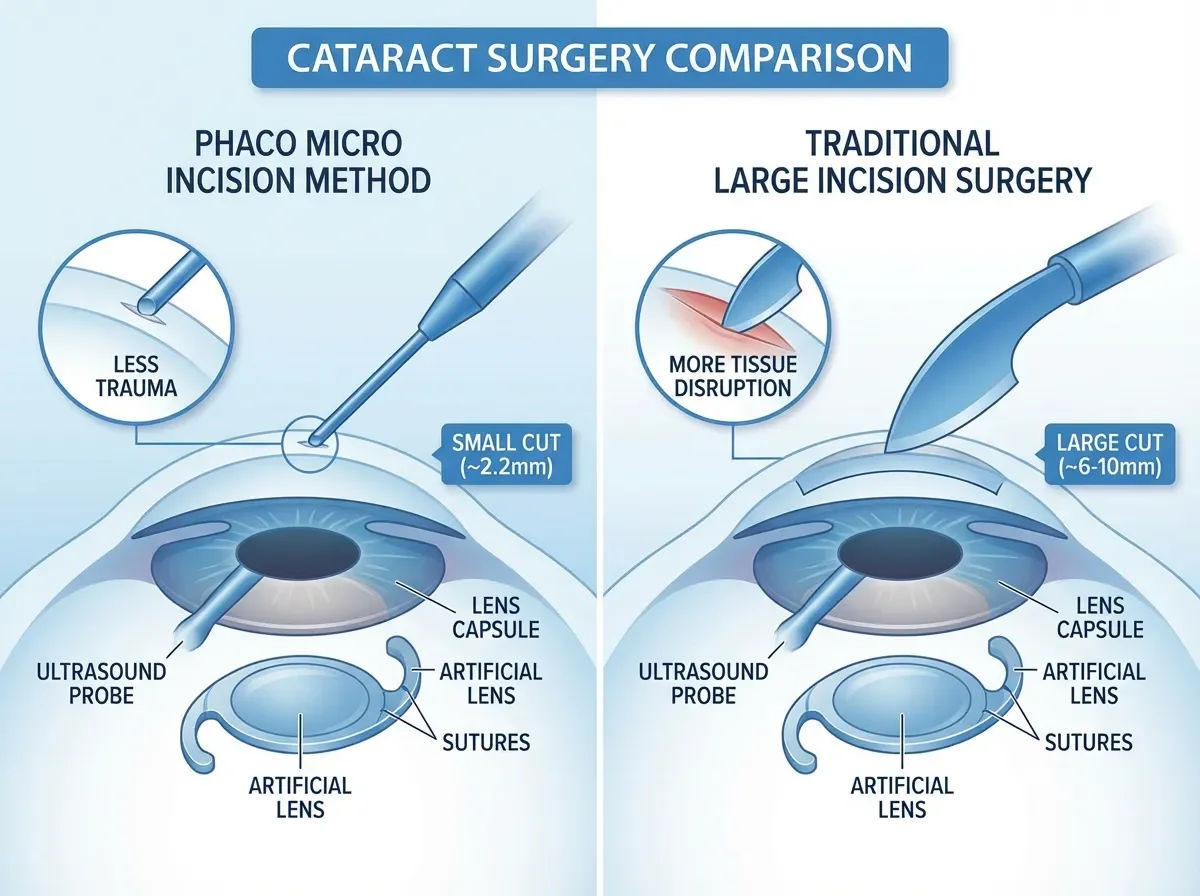
What is Phacoemulsification (Modern Cataract Surgery)?
Comparison Table: Phaco vs Traditional Cataract Surgery
Incision size
- less tissue disruption
- faster sealing
- less astigmatism
- quicker vision recovery
Use of ultrasound
Healing time
Sutures
Visual outcomes
Suitability for premium lenses
Which Technique Gives Better Results Overall?
- extremely dense cataracts
- patients who cannot afford premium options
- specific anatomical challenges
How Phaco Influences IOL Accuracy
Recovery Differences: What Patients Notice
Phaco recovery
- Rapid improvement within one to two days
- Minimal discomfort
- Light sensitivity that reduces quickly
- Return to normal activities within a few days
SICS recovery
- Vision may fluctuate for a week or more
- More foreign body sensation
- Astigmatism may settle gradually
- Slightly longer follow up schedule
Which Cataract Surgery is Right for You?
- patients who want the fastest possible healing
- those who want premium IOLs
- those looking for sharp refractive outcomes
- patients with early to moderate cataracts
- very dense cataracts
- patients where affordability is a major concern
- cases where premium lens implantation is not planned
Conclusion
Want our latest updates?
Add iSight Eye Care as a preferred source on Google to see our newest articles in your Top Stories and AI Overviews.
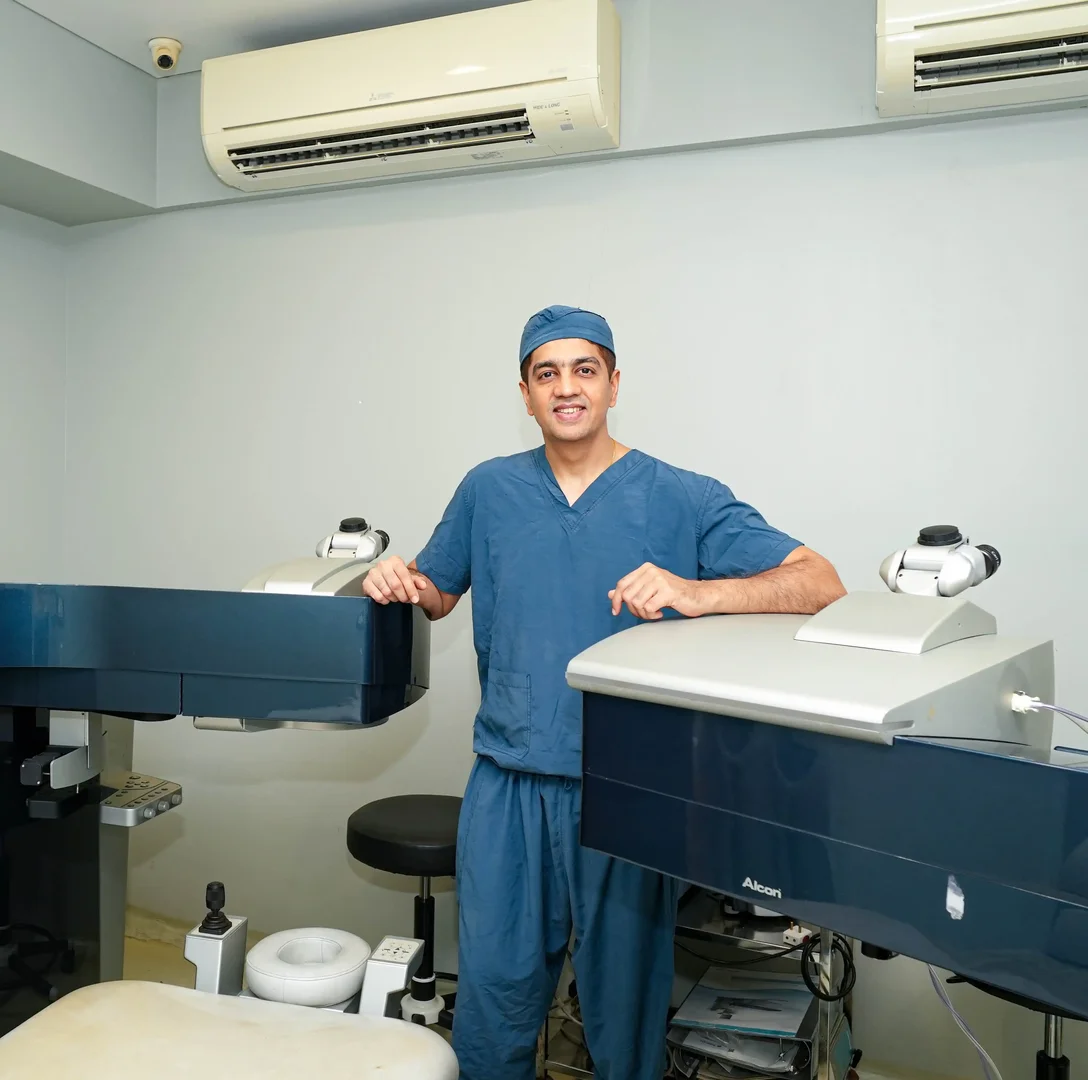
Dr. Nikhil Nasta
Dr. Nikhil Nasta is the Founder & Lead Surgeon at iSight Eye Care. With over two decades of experience, he specializes in advanced cataract surgery and comprehensive eye care, dedicated to restoring vision and improving patients' quality of life.
Related articles
Phaco Surgery in Mumbai
Cataracts are one of the most common reasons for blurred, cloudy vision as we age. Phaco surgery is a modern micro-incision technique for cataract removal.
Who Is the Ideal Candidate for Phaco Cataract Surgery?
The ideal candidate for phaco cataract surgery is someone whose cataract is affecting daily vision, has a healthy cornea and retina, and can benefit from small-incision surgery.
Cataract Surgery Recovery – Timeline & Aftercare Tips
Most people resume daily activities within 1–3 days after cataract surgery, but full healing takes 4–6 weeks. Learn about the recovery timeline and aftercare tips.
Robotic Cataract Surgery in Mumbai – Complete Guide
Robotic cataract surgery uses laser guidance for unmatched accuracy in lens removal and implant placement. Learn everything you need to know about robotic cataract surgery in Mumbai.

Book an appointment with Dr. Nikhil Nasta
Khar & Dadar · NABH accredited
Disclaimer: This information is for educational purposes only. Individual cases vary; consult a specialist for personalized advice.