iSight Eye Care

Early Signs of Glaucoma: Why You Need a Glaucoma Specialist in Mumbai
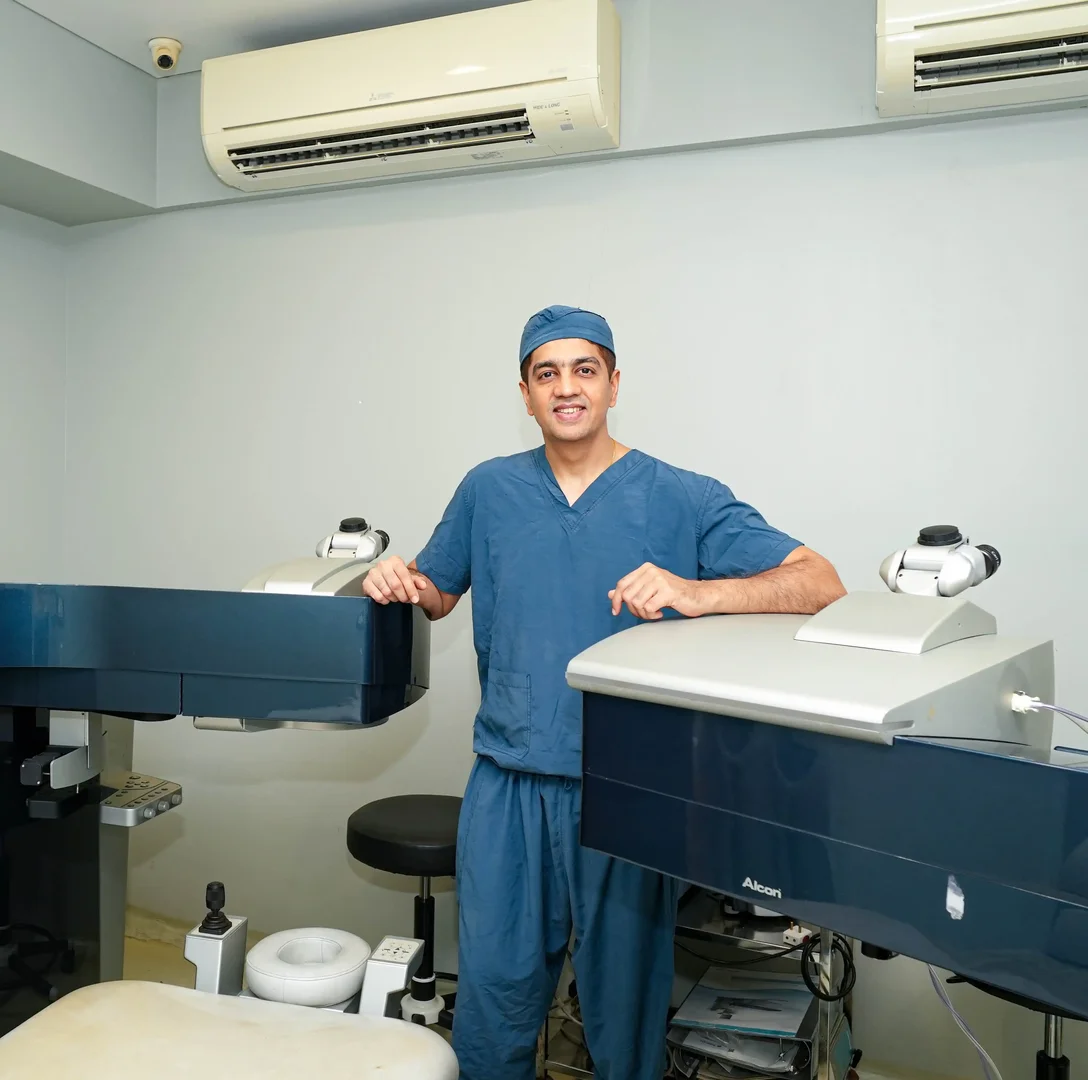
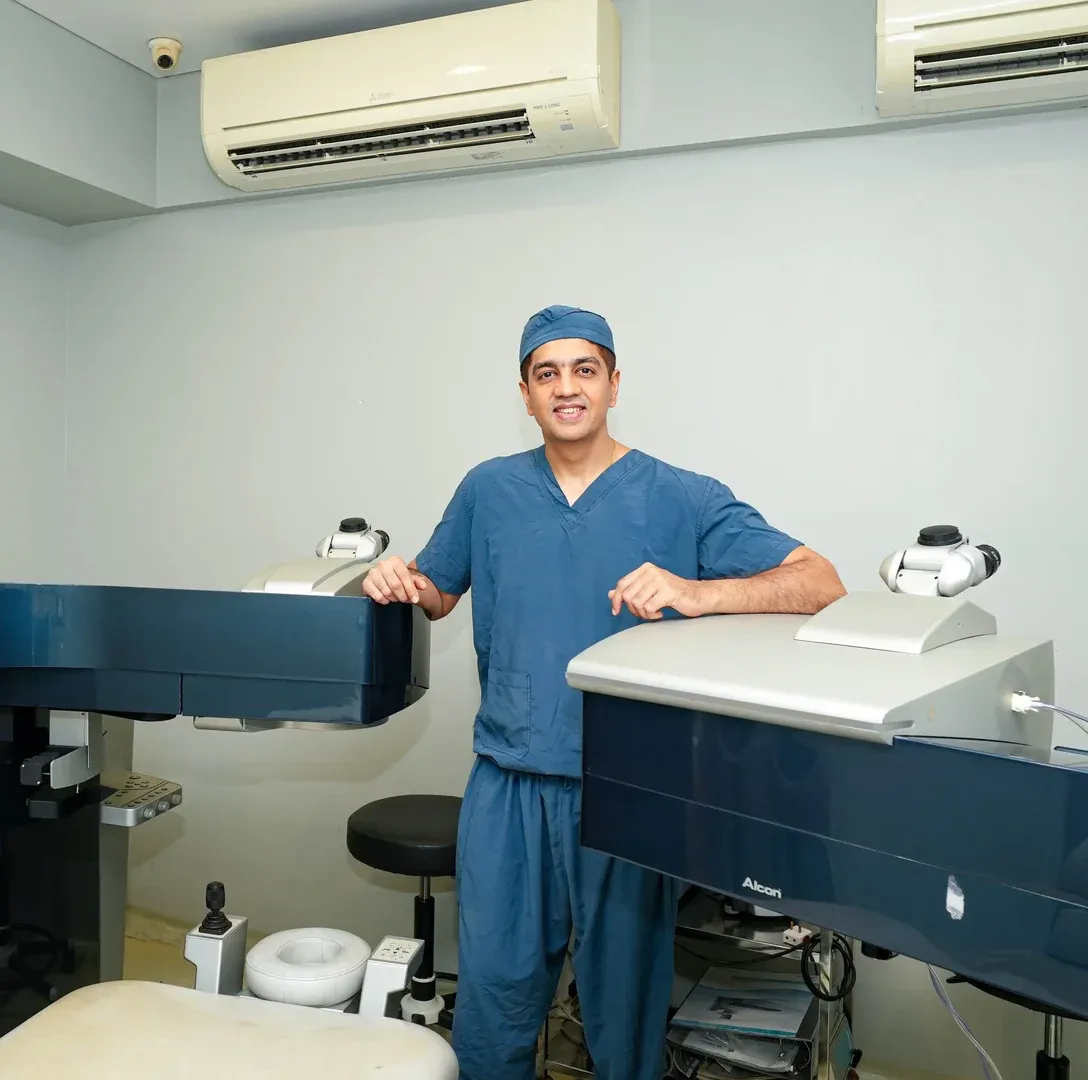
Dr. Nikhil Nasta
Dr. Nikhil Nasta
5 min read
Glaucoma is the silent thief of sight. Learn the early signs of glaucoma and why consulting a glaucoma specialist in Mumbai is vital for preserving your vision.
Glaucoma is often called the silent thief of sight because the commonest form presents with no early symptoms. By the time a patient notices vision loss, irreversible damage to the optic nerve has usually already occurred. Peripheral vision fades so slowly that the brain fills in the gaps. People bump into door frames, miss steps, or fail a driving test long before they think 'I should see a glaucoma specialist.' Regular pressure checks and optic-nerve imaging are the defence — not waiting for pain. In a city like Mumbai, where many adults skip eye exams until glasses feel wrong, glaucoma is still diagnosed later than it should be.

What is Glaucoma?

Glaucoma is a group of eye conditions that damage the optic nerve, the cable that carries images from the eye to the brain. Raised intraocular pressure is the best-known risk factor, but it is not the whole story. Some people develop glaucoma with 'normal' pressure (normal-tension glaucoma). Some have high pressure for years without nerve damage (ocular hypertension) and still need monitoring. The damage is mechanical and vascular: pressure and reduced perfusion injure nerve fibres at the optic disc. Lost fibres do not grow back. Treatment exists to protect what remains, not to restore the field that has already gone.

Open-Angle vs Angle-Closure: Different Diseases, Different Urgency

Primary open-angle glaucoma is the slow, silent type. The drainage angle of the eye looks open, pressure may be only moderately high, and vision seems fine until a field test or OCT proves otherwise. Angle-closure glaucoma is different. In some eyes — more often smaller, far-sighted eyes — the iris can crowd the drainage angle. A sudden block causes a steep pressure spike. That attack is an emergency, not a 'wait for a convenient appointment' problem.

Recognizing the Signs of Glaucoma

Open-angle glaucoma has almost no early warning. Angle-closure and some secondary glaucomas do. Take these seriously:
  • Gradual loss of peripheral (side) vision, usually in both eyes — often noticed late (open-angle)
  • Tunnel vision in advanced stages (open-angle)
  • Severe eye pain, headache, nausea and vomiting together (acute angle-closure — emergency)
  • Sudden blurred vision or rainbow-coloured halos around lights (angle-closure)
  • A red, hard-feeling eye with a mid-dilated pupil (angle-closure)
  • Frequent spectacle changes that still do not explain the blur
  • A family member already on glaucoma drops or who lost vision to glaucoma

Who Is at Higher Risk in Mumbai?

Age over 40, a first-degree relative with glaucoma, high myopia, diabetes, long-term steroid use (including some skin and asthma medicines), previous eye injury, and thinner corneas all raise risk. People of African or East Asian ancestry have higher rates of particular glaucoma types. None of these mean you 'have' glaucoma — they mean you should not skip the screening.

How a Glaucoma Specialist Actually Diagnoses It

A one-off pressure reading is not a diagnosis. A glaucoma work-up typically includes:
  • Intraocular pressure measured more than once, sometimes at different times of day
  • Corneal thickness (pachymetry), because a thin cornea can make pressure look falsely low
  • Gonioscopy to see whether the drainage angle is open or crowded
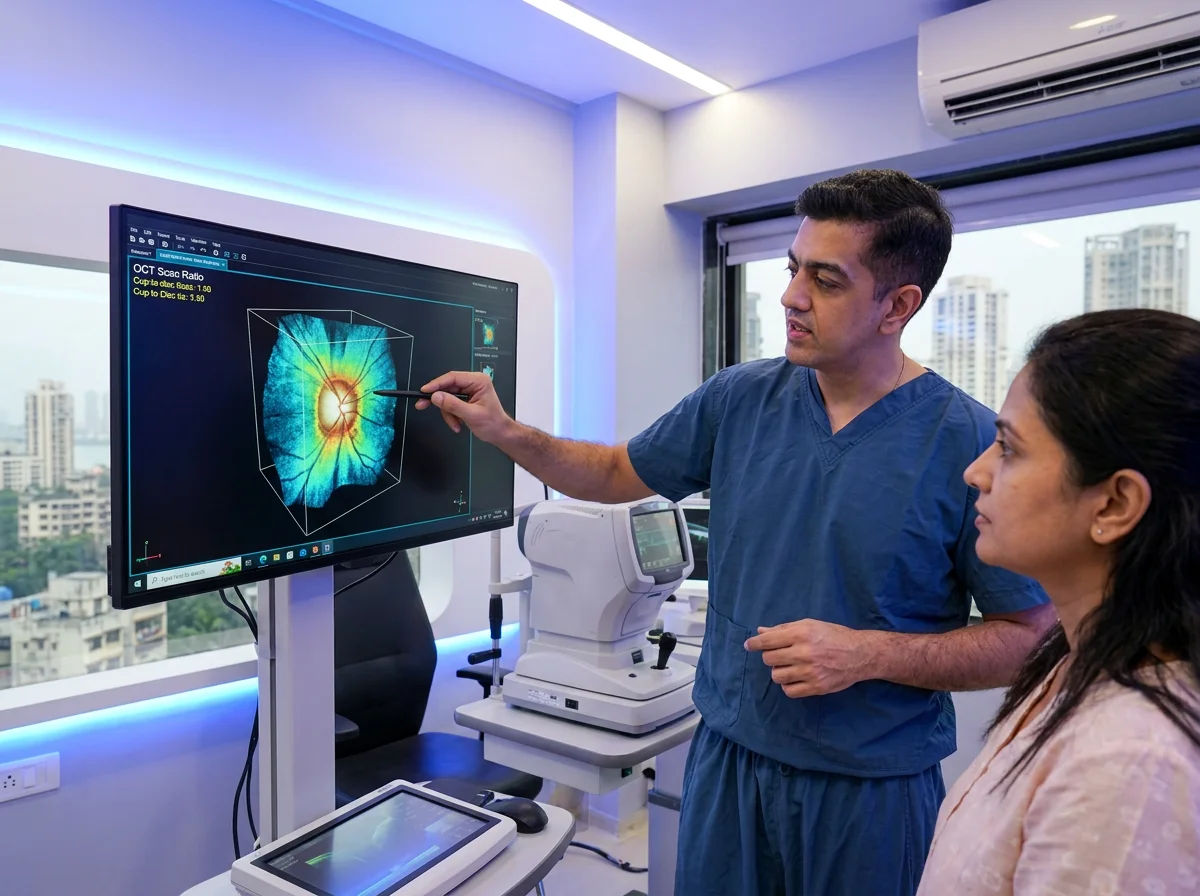
  • Optic-disc examination and OCT to measure the nerve-fibre layer
  • Visual field testing to catch functional loss the patient has not noticed
  • Disc photographs so future visits have a baseline to compare

Treatment: Drops, Laser and Surgery

The goal is a target pressure low enough to stop (or markedly slow) further nerve loss. First-line care is often a daily drop, sometimes more than one. Selective laser trabeculoplasty (SLT) can lower pressure in open-angle disease and is an option when drops are poorly tolerated or not enough. Minimally invasive glaucoma surgery (MIGS), trabeculectomy and tube shunts are reserved for disease that is progressing despite simpler measures, or for pressure that is dangerously high. Compliance matters as much as the molecule. A drop that stays in the bottle does not protect the nerve. A specialist will also look at the rest of the eye — cataract, retina, dry surface — because glaucoma does not occur in isolation.

Protect Your Vision Today

If you are over 40, have a family history of glaucoma, use steroid medicines, or have been told your pressures are 'a bit high,' do not wait for symptoms. Dr. Nikhil Nasta and the team at iSight Eye Care in Mumbai screen with pressure, fields and imaging, then match treatment to the type of glaucoma — not to a one-size-fits-all drop. Glaucoma treatment: Glaucoma Treatment Mumbai Book a screening: Consult
Share this article:

Want our latest updates?

Add iSight Eye Care as a preferred source on Google to see our newest articles in your Top Stories and AI Overviews.

Dr. Nikhil Nasta

Dr. Nikhil Nasta

Dr. Nikhil Nasta is the Founder & Lead Surgeon at iSight Eye Care. With over two decades of experience, he specializes in advanced cataract surgery and comprehensive eye care, dedicated to restoring vision and improving patients' quality of life.

Frequently Asked Questions

There is no cure, and vision already lost cannot be restored. With early detection and consistent treatment, progression can usually be slowed or halted so you keep the sight you still have.

Dr. Nikhil Nasta – Ophthalmologist, iSight Eye Care Mumbai
Schedule a visit

Book an appointment with Dr. Nikhil Nasta

Khar & Dadar · NABH accredited

Disclaimer: This information is for educational purposes only. Individual cases vary; consult a specialist for personalized advice.