
What Is Keratoconus? Symptoms, Causes and Treatment
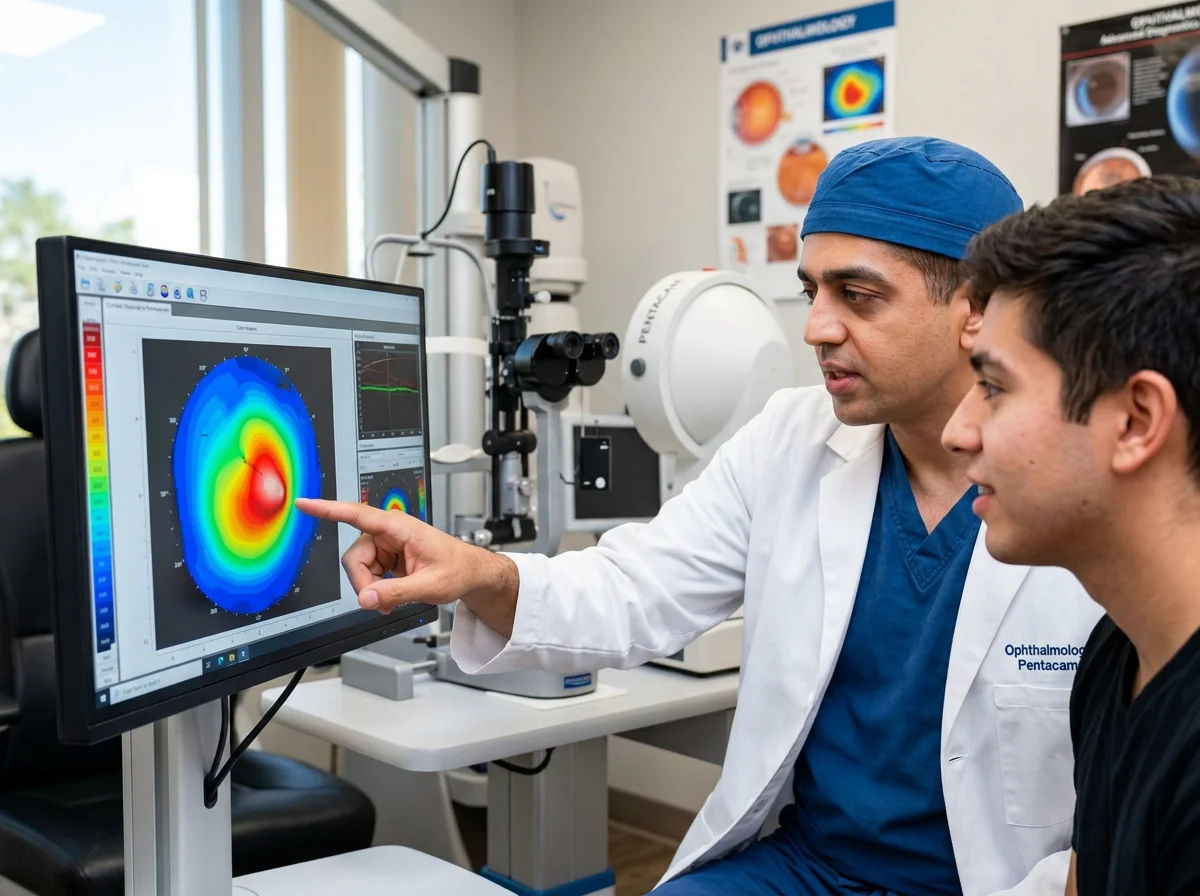
Symptoms That Should Trigger a Corneal Scan
- Blur or ghosting that a recent glasses change did not fix
- Frequent prescription changes, especially rising cylinder (astigmatism)
- Halos, glare and poor night driving in a young adult
- Itchy, allergic eyes and a habit of rubbing
- One eye clearly worse than the other
- Family history of keratoconus
How Keratoconus Is Diagnosed
Treatment Ladder (What Each Step Is For)
| Treatment | Goal | Typical patient |
|---|---|---|
| Stop eye rubbing + treat allergy | Remove a driver of progression | Almost everyone with KC and itch |
| Glasses or soft lenses | Help mild, regular astigmatism | Very early disease only |
| Rigid / scleral contact lenses | Mask irregular cornea for clearer vision | Most moderate cases |
| Corneal collagen crosslinking (CXL) | Stiffen the cornea to halt worsening | Documented progression, especially under 30 |
| Intracorneal rings / other procedures | Flatten the cone in selected eyes | Surgeon-selected anatomy |
| Corneal transplant | Replace scarred or extremely steep cornea | Advanced disease that lenses cannot help |
Why LASIK Is Dangerous Here
Get Mapped Before the Cone Progresses
Want our latest updates?
Add iSight Eye Care as a preferred source on Google to see our newest articles in your Top Stories and AI Overviews.
Dr. Nikhil Nasta
Dr. Nikhil Nasta is the Founder & Lead Surgeon at iSight Eye Care. With over two decades of experience, he specializes in advanced cataract surgery and comprehensive eye care, dedicated to restoring vision and improving patients' quality of life.
Related articles
Unlocking Clarity: Understanding the Cornea of the Eye
Cornea of the eye explained—layers, functions, common diseases, and modern treatments. Protect clarity with expert Mumbai care.
Top-Rated Centers for Corneal Transplant Surgeries in India
A guide to choosing top-rated corneal transplant centers based on graft success protocols, surgeon skill, and aftercare systems.
Frequently Asked Questions
Book an appointment with Dr. Nikhil Nasta
Khar & Dadar · NABH accredited
Disclaimer: This information is for educational purposes only. Individual cases vary; consult a specialist for personalized advice.