
Cataract Surgery in Mumbai: A Comprehensive Guide
Introduction
What is a Cataract?
- Blurred vision
- Difficulty reading
- Glare while driving
- Faded colours
- Trouble recognising faces
- Frequent changes in glasses
Symptoms of Cataract
- Difficulty reading even with updated glasses
- Blurry or foggy vision
- Sensitivity to bright light
- Reduced night vision
- Halos around lights
- Colours appearing washed out
- Double vision in one eye
- Trouble driving at night
- Need for more light while reading
Types of Cataracts
- Age-related cataract: Most common type caused by natural aging changes in the lens.
- Nuclear cataract: Affects the center of the lens, causing slow yellowing and blurred focus.
- Cortical cataract: White streaks or wedges forming around the edges.
- Posterior subcapsular cataract: Affects the back of the lens, progresses faster and affects near vision and bright light.
- Traumatic and secondary cataracts: Caused by injury, surgery or systemic conditions like diabetes.
Why Cataracts Occur
- Diabetes
- Excess sun exposure
- Smoking
- Long term steroid use
- Eye injuries
- Genetic predisposition
- Previous eye surgery
How Cataracts Are Diagnosed
- Visual acuity test: Checks clarity of distance and near vision.
- Slit lamp examination: Allows the doctor to see the lens opacity and its progression.
- Dilated retinal exam: Checks retina and optic nerve health before surgery.
- Biometry: Measures the exact length and curve of your eye to select the correct IOL power.
- Corneal topography: Maps the corneal shape to determine suitability for toric or premium IOLs.
When Should Cataracts Be Treated?
- Difficulty reading or working
- Trouble driving, especially at night
- Blurry or fluctuating vision
- Increased glare sensitivity
- Colours appearing dull
Modern Cataract Surgery Explained
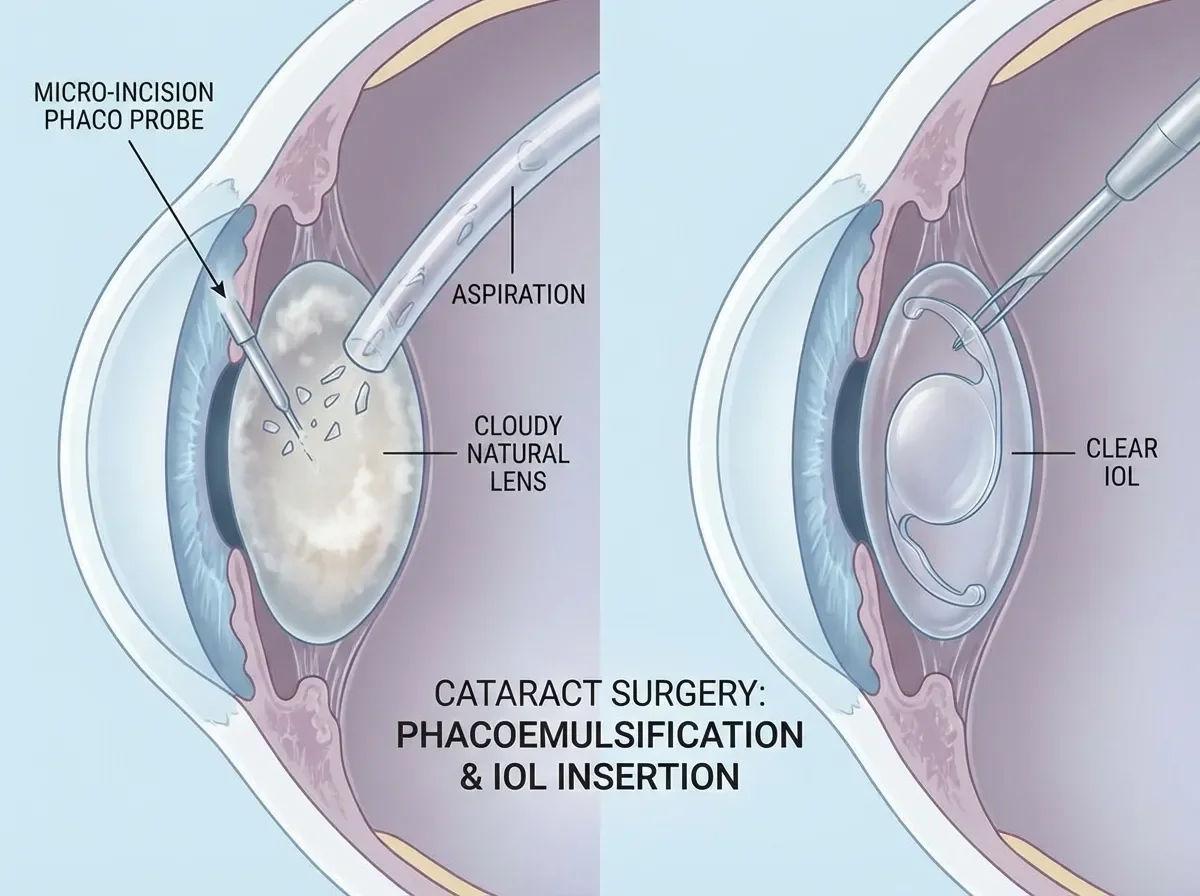
- Numbing drops are applied
- A tiny two to three millimeter incision is made
- Ultrasound breaks the cataract into small pieces
- These are gently removed
- A clear artificial lens (IOL) is implanted
- The incision seals naturally without stitches
Types of IOLs Used in Cataract Surgery
Monofocal IOL
- Clear vision for one distance
- Typically distance vision
- Glasses needed for near work
Toric IOL
- Corrects astigmatism
- Provides sharper clarity than monofocal in patients with cylindrical power
Multifocal IOL
- Clear distance, intermediate and near vision
- Reduced dependence on glasses
- May cause halos in some patients
Extended Depth of Focus (EDOF) IOL
- Smooth range of focus
- Excellent distance and intermediate
- Functional near
- Minimal halos
- Ideal for night driving
Trifocal IOL
- Three focal points
- Maximum spectacle freedom
- Clear reading and computer vision
Recovery After Cataract Surgery
- Day one: Clear improvement in vision. Mild irritation or watering is normal.
- First week: Sharper clarity. Light sensitivity reduces. Most routine tasks can be done comfortably.
- One month: Eye fully healed. Final prescription check. Premium lens adaptation continues improving contrast.
Possible Risks or Side Effects
- Mild swelling
- Temporary rise in eye pressure
- Inflammation
- Dryness
- Posterior capsule opacification (treated with a quick laser)
Cataract Surgery Cost in Mumbai
- Type of IOL
- Technology used
- Hospital setup
- Surgeon experience
Choosing the Right Cataract Surgeon
- Experience in premium IOL implantation
- Access to modern diagnostic equipment
- Expertise in phaco surgery
- Clean discussion of expectations
- Comprehensive pre and post care
Conclusion
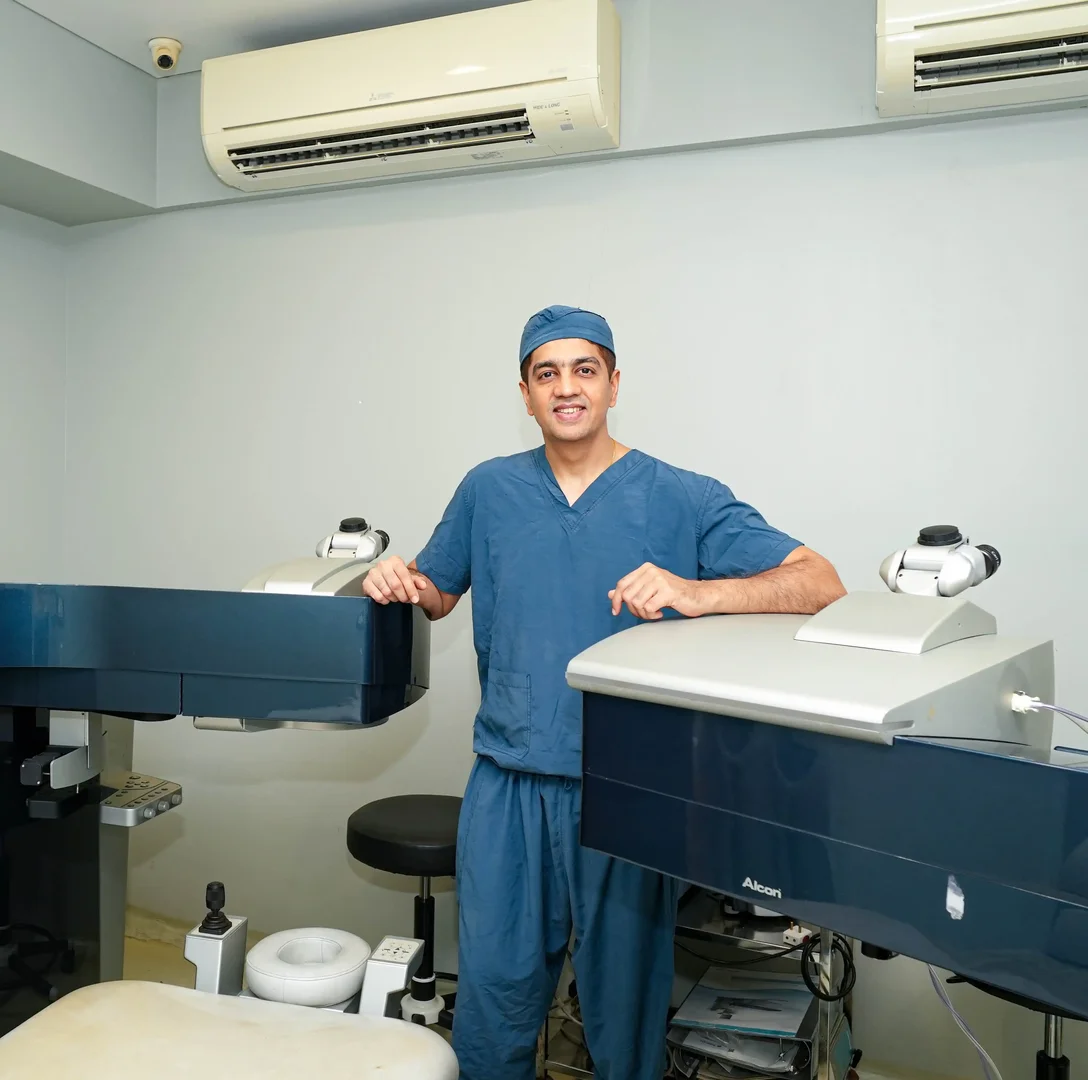
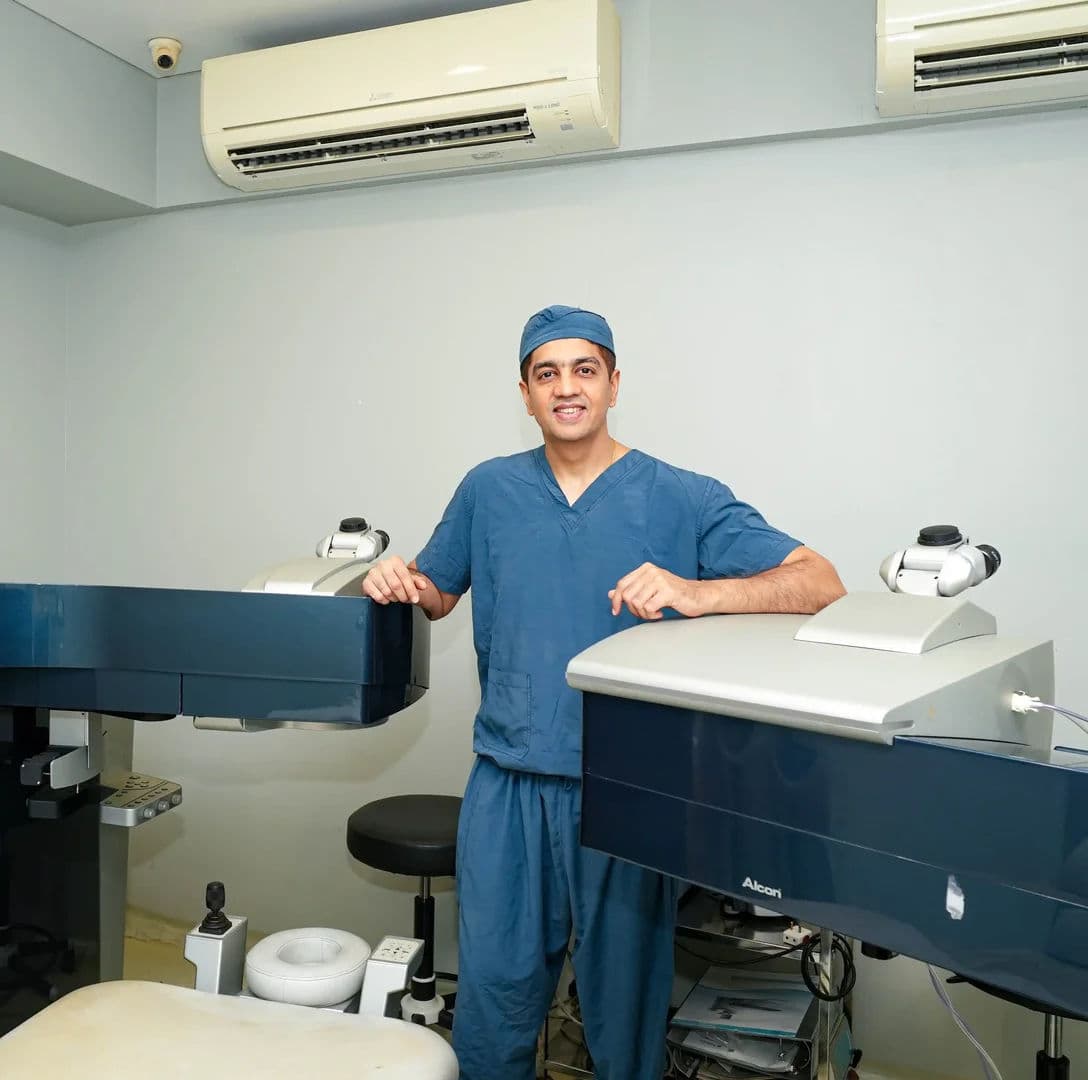
Dr. Nikhil Nasta
Dr. Nikhil Nasta is the Founder & Lead Surgeon at iSight Eye Care. With over two decades of experience, he specializes in advanced cataract surgery and comprehensive eye care, dedicated to restoring vision and improving patients' quality of life.
Related articles
Phaco Surgery in Mumbai
Cataracts are one of the most common reasons for blurred, cloudy vision as we age. Phaco surgery is a modern micro-incision technique for cataract removal.
Who Is the Ideal Candidate for Phaco Cataract Surgery?
The ideal candidate for phaco cataract surgery is someone whose cataract is affecting daily vision, has a healthy cornea and retina, and can benefit from small-incision surgery.
Cataract Surgery in Mumbai
Cataracts are one of the most common causes of blurred vision after the age of 40. Learn about the symptoms, treatment options, and why you should choose I-Sight Eye Care.
Cataract Surgery Recovery – Timeline & Aftercare Tips
Most people resume daily activities within 1–3 days after cataract surgery, but full healing takes 4–6 weeks. Learn about the recovery timeline and aftercare tips.
Book an appointment with Dr. Nikhil Nasta
Khar & Dadar · NABH accredited
Disclaimer: This information is for educational purposes only. Individual cases vary; consult a specialist for personalized advice.