Is LASIK Safe? 20 Honest Questions Answered for Indian Patients (2026)
Dr. Nikhil Nasta
9 min read

LASIK Safety: The Short Answer
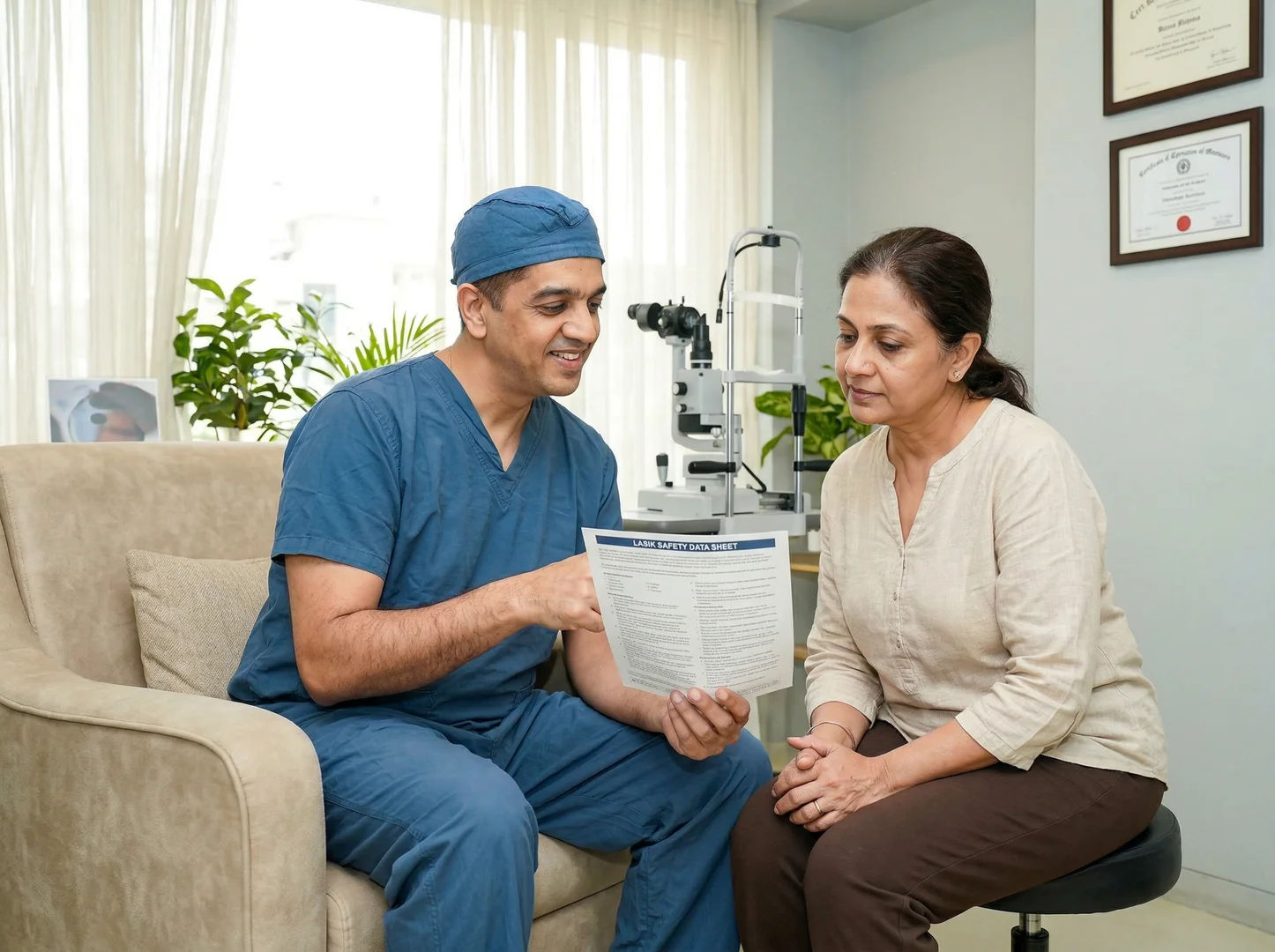
LASIK is one of the most extensively studied elective surgical procedures in the world, with over 40 million procedures performed globally since its introduction. The overall satisfaction rate among LASIK patients consistently exceeds 95% across large-scale studies. In India, LASIK is performed safely at leading refractive centres in Mumbai, Delhi, Bengaluru, and other major cities, using the same globally approved laser platforms. That said, like any surgical procedure, LASIK is not risk-free, and it is not suitable for everyone. The safest LASIK is the one preceded by the most thorough pre-operative screening, and the most honest conversation about candidacy.
Who Is NOT a Good Candidate for LASIK?
Knowing who should not have LASIK is as important as knowing the procedure details. Responsible surgeons in Mumbai will decline, or defer, surgery for patients in the following categories:
- Keratoconus or forme fruste keratoconus, this is an absolute contraindication; the cornea is already structurally compromised and LASIK would worsen it
- Corneal thickness below safe minimum, standard LASIK requires a residual stromal bed of at least 250–280 microns after ablation
- Unstable prescription, vision must have been stable for at least one to two years; operating on changing prescriptions produces unpredictable outcomes
- Uncontrolled moderate-to-severe dry eye disease, LASIK temporarily reduces corneal sensation and can significantly worsen pre-existing dryness
- Pregnant or breastfeeding, hormonal changes affect corneal curvature and refraction; outcomes would be unreliable
- Age under 18, the eye is typically still developing; premature surgery risks regression as vision continues to change
- Certain autoimmune or connective tissue disorders, conditions affecting wound healing can impair corneal recovery
- Very high prescriptions beyond the safe treatment range, alternatives like ICL may be more appropriate
What Is the LASIK Success Rate in India?
Published clinical data from large-scale studies places the LASIK success rate, defined as achieving 6/6 (20/20) or better uncorrected vision, at approximately 90–96% for standard prescriptions. For patients who begin with moderate myopia and healthy corneas, this figure is consistently at the higher end. A small proportion of patients achieve 6/9 rather than 6/6 and may choose a minor enhancement or spectacle prescription for specific tasks like night driving. The global LASIK enhancement rate (touch-up procedures) is approximately 1–5% over ten years, typically for prescription regression rather than complications. These numbers are broadly applicable to Indian patients treated at reputable Mumbai centres using current technology.
How Often Does LASIK Fail?
The word 'failure' in LASIK context typically means either under-correction (vision not fully corrected), over-correction (overcorrection beyond target), or regression (initial good outcome followed by gradual prescription drift over months or years). True surgical failures, severe complications leading to permanent vision loss, are extremely rare when pre-operative screening is thorough. Under-correction and regression rates have declined significantly with modern topography-guided and wavefront-optimised platforms. If regression occurs and there is sufficient residual corneal thickness, an enhancement procedure can be performed.
Common Side Effects of LASIK (Most Are Temporary)
- Dry eyes, the most common side effect, affecting 20–40% of patients in the early weeks post-surgery; usually resolves within three to six months with prescribed eye drops
- Halos and starbursts around lights, especially at night, common in the first one to three months; typically diminishes as the cornea heals and settles
- Light sensitivity, manageable with sunglasses; generally resolves within weeks
- Blurred or fluctuating vision in the first days, normal as the flap or lenticule heals and tear film stabilises
- Mild discomfort or foreign body sensation in the first 24–48 hours, expected; managed with lubricant drops
- Reduced contrast sensitivity initially, almost always improves as healing progresses
Serious Complications: How Rare Are They?
Serious, long-term complications from LASIK are rare when appropriate candidacy criteria are followed. The most significant risks include:
- Flap complications (flap dislodgement, irregular flap), rate less than 0.5% at experienced centres using femtosecond flap creation
- Corneal ectasia, progressive corneal weakening post-LASIK; rate approximately 0.04–0.6% and strongly associated with inadequate pre-operative screening and thin corneas; essentially preventable with proper workup
- Infection (microbial keratitis), rare (approximately 1 in 5,000 cases) and treatable when caught early
- Persistent significant dry eye, affects a small minority; manageable with long-term lubricant therapy, punctal plugs, or in rare cases further intervention
- Significant over- or under-correction not amenable to enhancement, rare with modern topography-guided platforms
Is LASIK Permanent? Will It Wear Off?
The corneal reshaping achieved by LASIK is permanent. The tissue removed does not regenerate. However, 'permanent' does not mean your vision will never change after LASIK, the natural ageing of the eye continues independently of the procedure. Two considerations: First, patients who have LASIK in their 20s may experience mild prescription drift (regression) in subsequent decades as the eye continues to change, this is distinct from LASIK wearing off. Second, presbyopia (difficulty reading without glasses) develops in most people after age 40–45 regardless of whether they have had LASIK. LASIK corrects distance vision; it does not prevent the natural age-related loss of near focus.
Can LASIK Be Done Again If Needed?
Yes, under certain conditions. An enhancement procedure (re-treatment) can be performed if there is sufficient residual corneal thickness remaining after the original surgery. Most experienced surgeons in Mumbai will include an enhancement policy in the original LASIK package, ask about this specifically before consenting to the first procedure. Enhancement rates are approximately 1–5% over ten years for modern procedures.
LASIK and Dry Eyes: A Special Concern for Mumbai Patients
Dry eye is the most frequently reported side effect of LASIK, and it deserves specific attention for Mumbai patients. The coastal Mumbai climate, high pollution levels, prolonged air-conditioned environments in offices, and the city's very high screen-time professional culture all contribute to pre-existing dry eye risk in the population. Any reputable Mumbai refractive centre will conduct a thorough dry eye assessment, including tear film osmolarity, meibomian gland evaluation, and Schirmer's test, before recommending LASIK. Moderate dry eye does not automatically disqualify someone from LASIK, but it does change the treatment approach: dry eye treatment before surgery, careful procedure selection (SMILE reduces dry eye incidence compared to flap-based LASIK), and aggressive lubrication post-operatively.
Is LASIK Safe in India at Non-Premium Centres?
This is the most honest question to ask. LASIK is safe when performed with rigorous pre-operative screening, well-maintained current-generation equipment, and experienced surgeons. These conditions are not guaranteed by clinic branding or price. In India, as in any country, there is variability in the quality of pre-operative assessment, equipment maintenance, and surgical experience. The primary risk factors for LASIK complications in India, or anywhere, are performing surgery on poor candidates and using inadequate pre-op screening. This is why a thorough candidacy workup at a reputable Mumbai centre is not optional, it is the procedure's most important safety step.
Age Questions: Can You Be Too Young or Too Old for LASIK?
- Under 18: Not recommended, the eye is still developing and prescription is likely changing
- 18–40: The optimal window for most patients, prescription typically stable, healing response strong
- 40–50: Possible but requires a more detailed discussion, presbyopia is emerging or will emerge, which LASIK does not address; monovision LASIK or lens-based options may be more appropriate
- Over 50: LASIK is less commonly the best answer; premium lens implant surgery (EDOF or trifocal IOL) often provides better overall visual function including near vision
- Maximum age: No strict upper limit for LASIK, but the lens inside the eye begins to become a more significant optical element from the mid-40s onward, and lens-based solutions increasingly make more sense
What Patients on Reddit and Quora Say About LASIK in India
Community discussions about LASIK in India, on platforms like Reddit (r/india, r/lasik) and Quora, commonly surface the following themes: patients who regret choosing the cheapest available option, patients who wish they had asked more questions about corneal thickness before consenting, patients who are very satisfied after thorough pre-op screening at reputable centres, and patients asking whether their symptoms in recovery are normal (usually yes). The consistent thread in positive outcomes: patients who chose centres based on the quality of the consultation, not the price of the advertisement. Critical forum feedback is almost always linked to inadequate candidacy screening or poor post-op care, not to the LASIK procedure itself when performed correctly.
Where to Get LASIK Safely in Mumbai
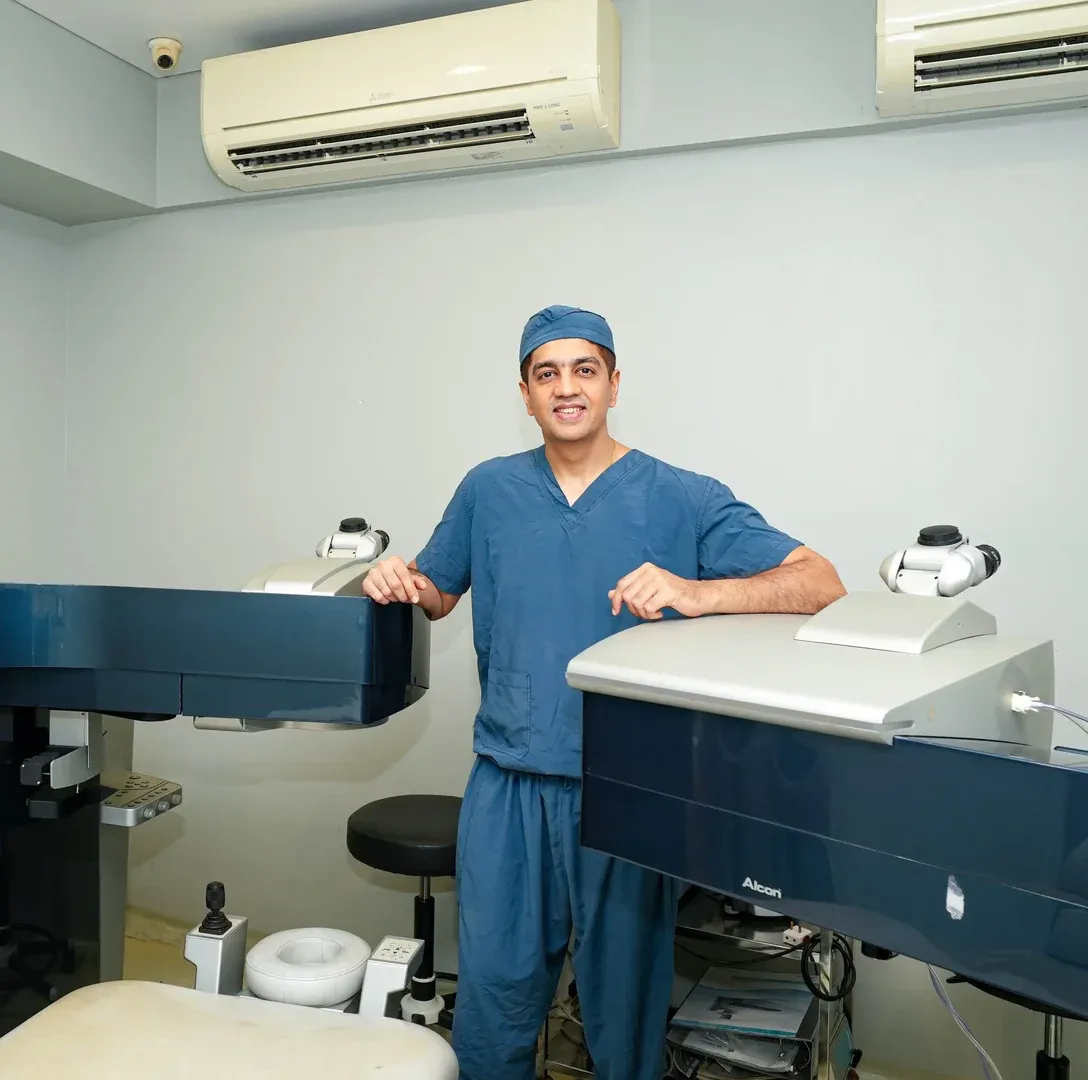
Seek a centre that uses named, current-generation laser platforms, employs a refractive-subspecialist surgeon, conducts a full pre-operative workup before scheduling surgery, and provides a written enhancement policy. At eyesurgeonmumbai.com, the evaluation process is led by an experienced refractive surgeon and includes comprehensive corneal mapping, dry eye assessment, and an honest conversation about candidacy. Learn more at Lasik Surgery Mumbai. Book a consultation at Consult.

Dr. Nikhil Nasta
Dr. Nikhil Nasta is the Founder & Lead Surgeon at iSight Eye Care. With over two decades of experience, he specializes in advanced cataract surgery and comprehensive eye care, dedicated to restoring vision and improving patients' quality of life.
Frequently Asked Questions
LASIK is safe in India when performed at reputable centres with rigorous pre-operative screening, current laser platforms, and experienced surgeons. The main risk factor for complications, in India or anywhere, is inadequate candidacy assessment, not the procedure itself.

Schedule a visit
Book an appointment with Dr. Nikhil Nasta
Khar & Dadar · NABH accredited
Disclaimer: This information is for educational purposes only. Individual cases vary; consult a specialist for personalized advice.