iSight Eye Care

My LASIK Eye Surgery Experience in Mumbai: What to Really Expect (Before, During & After)
Dr. Nikhil Nasta
Dr. Nikhil Nasta
8 min read
My LASIK Eye Surgery Experience in Mumbai: What to Really Expect (Before, During & After)

Why I Finally Decided to Get LASIK in Mumbai

Twelve years of glasses. Seven of wearing daily disposable contact lenses. Waking up every morning and reaching for the table before I could see the table. The calculation that finally pushed me over the edge was embarrassingly simple: I was spending approximately ₹18,000 a year on lenses and solutions alone. In twenty years, that is ₹3,60,000, more than the cost of LASIK, and I would still need glasses for emergencies. What follows is an honest account of what the LASIK experience in Mumbai actually looks like, not a brochure, but a composite of what patients at a leading Mumbai refractive centre typically go through. The timeline, costs, and milestones are real. The perspective is as unfiltered as medicine allows.

How I Found a Surgeon in Mumbai (What I Actually Looked For)

I did not search for the cheapest LASIK in Mumbai; I specifically avoided that. I looked for: a centre with a named surgeon (not just a brand name), a surgeon with a refractive subspecialty fellowship, a pre-op process that involved multiple diagnostic tests before anyone mentioned surgery dates, and a willingness to tell me if I was not a candidate. I read Quora threads about LASIK experiences in Mumbai. I read the Reddit LASIK community. The consistent pattern: patients with bad outcomes had chosen based on price or convenience. Patients who were satisfied had chosen based on the depth of the consultation. I shortlisted two centres and booked consultations at both.

The Consultation: What Happened, What Tests Were Done

The pre-operative screening appointment took approximately two hours. I had expected a quick eye check. What actually happened:
  • Corneal topography and tomography, a full 3D map of my cornea's shape and thickness. The printout looks like a weather map. The doctor walked me through what it showed.
  • Pachymetry, ultrasound measurement of corneal thickness at multiple points
  • Pupil size measurement in different lighting conditions, relevant for night halos risk
  • Tear film assessment and dry eye evaluation, a Schirmer's test plus meibomian gland imaging
  • Wavefront aberrometry, measuring higher-order aberrations beyond basic prescription
  • Dilated retinal exam, the doctor checked the retina before recommending any laser to the front of the eye
  • Full prescription refraction under cycloplegia (dilating drops that temporarily freeze accommodation for an accurate baseline prescription)

What the Surgeon Told Me After the Workup

The surgeon sat with me for about 20 minutes going through the results. My corneas were thick enough. My prescription was stable. I had mild dry eye, common in Mumbai for anyone who works in air-conditioned offices. The recommendation: start lubricant eye drops for four weeks before surgery. Come back for a repeat dry eye assessment. If stable, proceed with Contoura LASIK rather than standard LASIK, the topography-guided approach was recommended because of mild surface irregularity in my cornea that would benefit from personalised treatment. He also told me I was not a candidate for SMILE because my prescription included hyperopic astigmatism, which is outside SMILE's approved range. I appreciated being told what I could not have as much as what I could.

Day of Surgery: Step-by-Step: What to Expect

Surgery day at a well-run Mumbai LASIK centre is calmer than you expect. Patients are asked to arrive without any eye makeup, perfume, or contact lenses (stop lenses several days before, soft lenses typically 5–7 days, rigid lenses up to two weeks). The process on the day:
  • Arrival and final paperwork, consent forms explained in detail, not just handed over
  • Eye numbing drops instilled, these are the anaesthetic; there is no injection near the eye
  • You lie down under the laser, the room is cool and clinical; the staff are calm
  • A device holds the eye open gently, this sounds uncomfortable but is not painful
  • Femtosecond laser creates the corneal flap, takes about 20 seconds per eye; you see a dim light and brief pressure
  • Excimer laser reshapes the cornea, takes 20–60 seconds depending on the prescription; you focus on a blinking light
  • Flap is repositioned, the surgeon smooths it back; you feel nothing
  • Eye shields placed, worn for sleeping for the first week
  • Total time in the laser room: approximately 15 minutes for both eyes

Immediately After: The First 24 Hours

The first few hours are the strangest. Vision is hazy, like looking through gauze. The eyes water. There is a sensation like sand or an eyelash that you desperately want to rub, which you absolutely must not. The centre sends you home with: antibiotic drops (four times a day for one week), steroid drops (four times a day, tapering over two weeks), and lubricant drops (as needed, which for most people is every 30–60 minutes for the first weeks). The golden rule for the first 24 hours: go home, close your eyes, sleep if possible. Most patients wake up six to eight hours later with noticeably clearer vision. The first clear glimpse without glasses is one of those quietly extraordinary moments.

Week 1 Recovery: An Honest Account

The first week post-LASIK at a Mumbai centre involves several things people do not always mention in promotional content:
  • Dry eyes are real, the eye drops schedule is frequent and non-negotiable; skipping lubricants makes dryness worse
  • Screen time hurts, even if your eyes feel fine, extended screen use without frequent blinking and drops causes discomfort; the Mumbai office environment is particularly challenging
  • Night vision halos are normal and prominent in week one, lights at night have a starburst or glow around them; this is part of healing
  • No eye makeup for two weeks minimum
  • No swimming for four weeks, chlorine is the enemy of a healing cornea
  • Sunglasses outdoors for the first month, UV protection matters while healing
  • You attend a day-one check, a week-one check, and a month-one check, attend all of them even if vision feels perfect

One Month Later: The Real Result

At the one-month mark, vision has typically stabilised. Most patients are at 6/6 or better uncorrected. The dryness is noticeably better. Night halos are reduced. The eye drops routine has simplified. This is when the reality of LASIK sets in, not dramatically, but quietly. No glasses in the morning. No contacts to remove before bed. No lens cases in the travel bag. A friend who had avoided LASIK for three years after watching a clinic advertisement that scared him finally booked his consultation after seeing my result. He was told he was not a candidate due to thin corneas, which he found out honestly, which is itself a good outcome. The best LASIK experience in Mumbai is one where you get the truth, not just the surgery.

Cost Breakdown: What Was Actually Paid

For Contoura topography-guided LASIK (both eyes) at a leading Mumbai refractive centre in 2026, the cost breakdown was approximately: Comprehensive pre-operative workup: included in the package. Surgeon consultation: included. Both eyes (Contoura platform): ₹1,10,000–₹1,30,000 total for both eyes. Post-operative medications (supplied separately at pharmacy): approximately ₹1,500–₹2,000. Follow-up visits: three included in the package; additional visits as needed. Total out-of-pocket: approximately ₹1,12,000–₹1,32,000 for the full experience at a premium centre. EMI was available; a no-cost 12-month EMI was used. At ₹10,000/month, this felt manageable. This is broadly representative, actual costs vary by procedure type and centre.

Would I Recommend LASIK in Mumbai? An Honest Answer

Yes, with one important condition. Choose based on the quality of the pre-operative process, not the price. The two hours of diagnostic testing before surgery is not bureaucracy; it is the procedure's most important safety layer. A Mumbai refractive centre that schedules your surgery before mapping your corneas is not a centre worth trusting. If you want to start the process, explore what the assessment involves at Lasik Surgery Mumbai and book a consultation at Consult. The workup will tell you honestly whether LASIK, or which type of LASIK, is right for you.
Share this article:
Dr. Nikhil Nasta

Dr. Nikhil Nasta

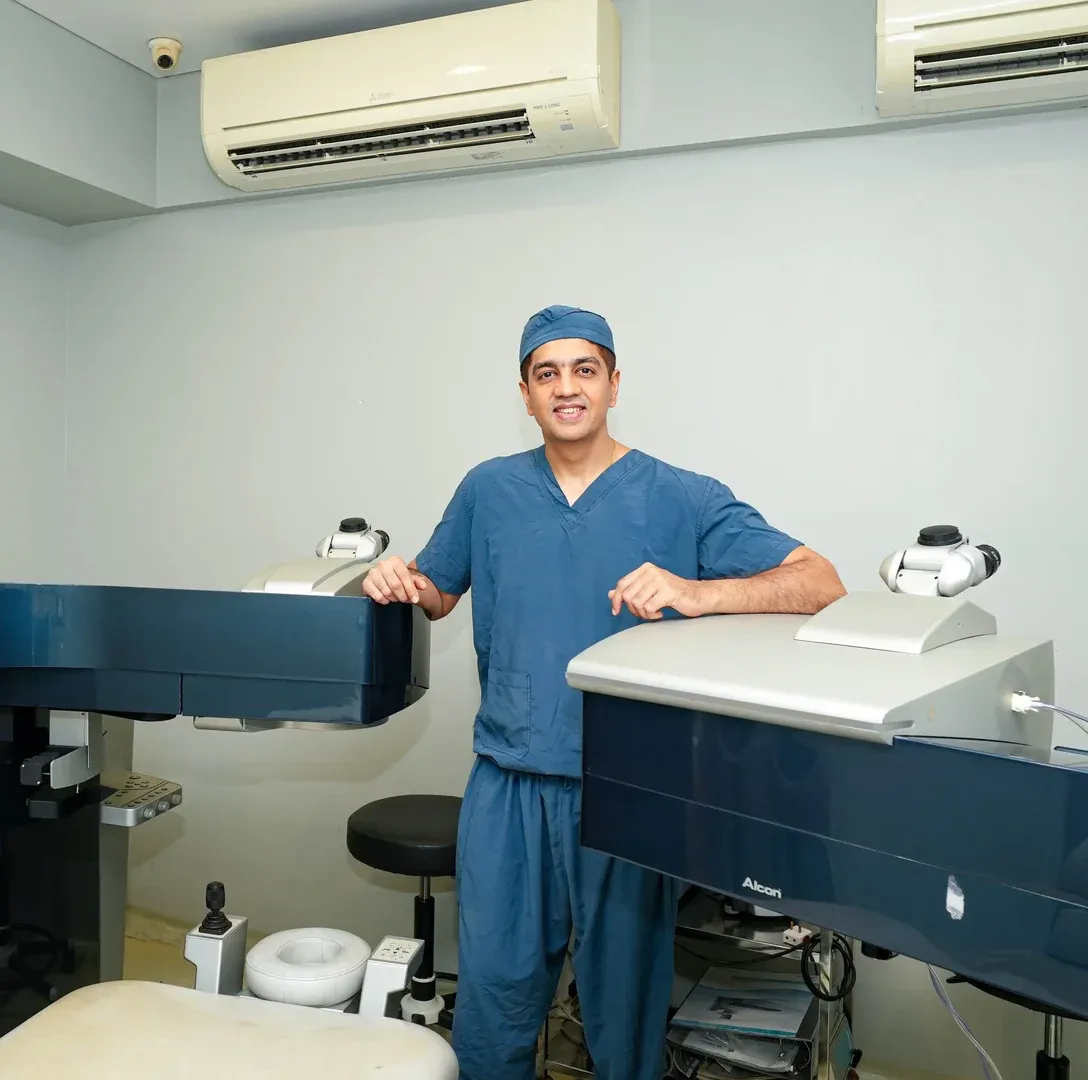
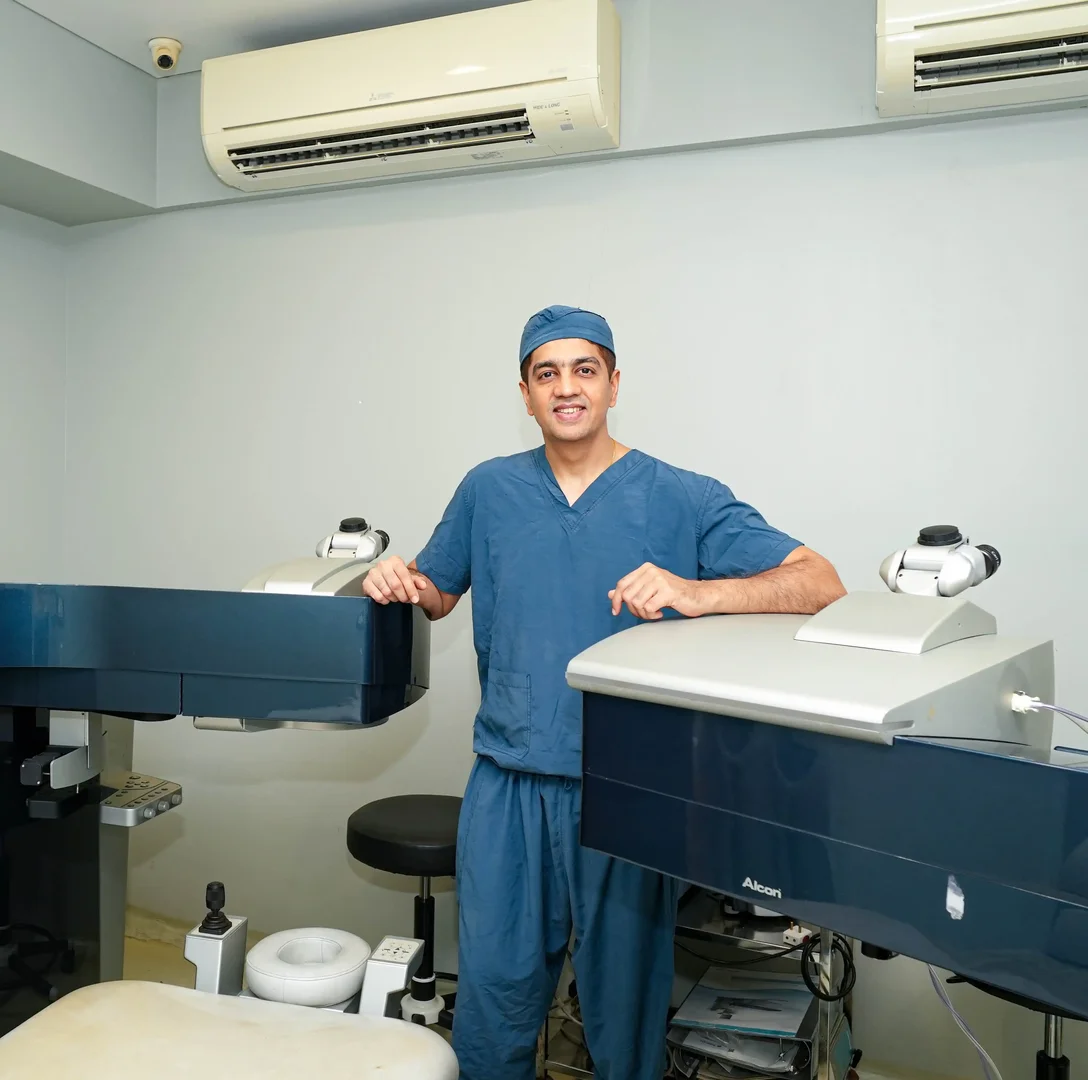
Dr. Nikhil Nasta is the Founder & Lead Surgeon at iSight Eye Care. With over two decades of experience, he specializes in advanced cataract surgery and comprehensive eye care, dedicated to restoring vision and improving patients' quality of life.

Frequently Asked Questions

The laser procedure itself takes approximately 10–15 minutes for both eyes. The full day at the clinic, including preparation and post-op checks, is typically two to three hours.

Dr. Nikhil Nasta – Ophthalmologist, iSight Eye Care Mumbai
Schedule a visit

Book an appointment with Dr. Nikhil Nasta

Khar & Dadar · NABH accredited

Disclaimer: This information is for educational purposes only. Individual cases vary; consult a specialist for personalized advice.