iSight Eye Care

Pediatric Eye Doctor in Mumbai: When Should Your Child Get Their First Eye Exam?
Dr. Nikhil Nasta
Dr. Nikhil Nasta
5 min read
Discover the importance of early eye care. Learn when to visit a pediatric eye doctor in Mumbai and what signs indicate your child might need an eye exam.
Good vision is essential for a child's physical development, educational success, and overall well-being. Children often do not realise when their vision is impaired because they assume everyone sees the world the way they do. A child who has never had clear distance vision will not complain that the blackboard is blurry — they simply copy from a neighbour, avoid reading, or get labelled as inattentive. That is why a visit to a pediatric eye doctor is part of healthcare, not an optional extra after school complaints start. In Mumbai, where children spend long hours on homework, tuition and screens, uncorrected refractive error, squint and lazy eye are still missed until they are harder to reverse.

When Should You Schedule the First Exam?

A newborn's red reflex is checked in the nursery, but that is a screening, not a full eye exam. Leading paediatric and optometric guidance still points to a first comprehensive check around 6 months of age. If that exam is normal, the next structured visit is around age 3, then again before Class 1 (age 5 or 6). Once school starts, healthy children still need an exam every one to two years. Bring the child sooner — even as an infant — if there is a family history of squint, lazy eye, high glasses power, childhood cataract, or if you notice an eye turn, a white reflex in photos, or poor eye contact. Premature babies and children with developmental delay deserve a lower threshold for a specialist look.

Signs Your Child Needs an Eye Doctor

Even if your child has not reached the next scheduled age, book a pediatric eye doctor if you notice any of the following:
  • Frequent eye rubbing, excessive blinking, or watering without a cold
  • Squinting, closing one eye, or tilting the head to see better
  • Sitting too close to the TV or holding books and tablets very close
  • Complaining of headaches, tired eyes, or double vision after homework
  • Avoiding reading, colouring, or other close-up work they used to enjoy
  • A noticeable eye turn (strabismus), a droopy lid, or a 'lazy eye'
  • A white or yellow glow in the pupil on flash photographs
  • Falling grades, skipping lines while reading, or losing their place on the page

What Happens During a Pediatric Eye Exam?

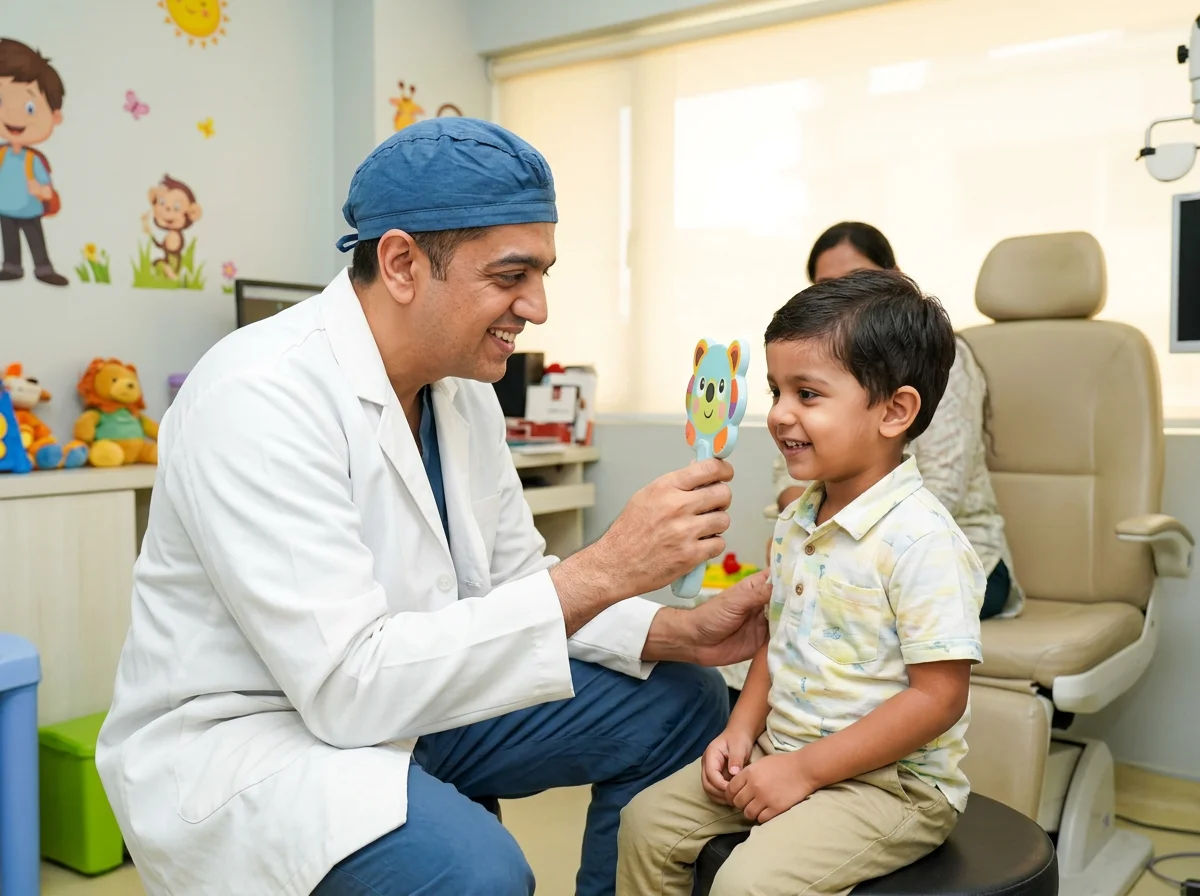
A pediatric exam is tailored to age. Infants and toddlers who cannot read a chart are still fully testable. The doctor uses lights, toys, retinoscopy and age-appropriate picture or LEA-symbol charts to measure refractive error, check alignment, and look at the health of the front and back of the eye. Many children need cycloplegic drops — drops that temporarily relax the focusing muscle — so a hidden plus power (hyperopia) is not missed. The drops sting for a few seconds and blur near vision for a few hours. That extra step is often the difference between 'the vision looks fine' and catching a lazy eye in time. The room should feel unhurried. A good pediatric-aware clinic does not rush a three-year-old through an adult refraction and call it a day.

Conditions a Pediatric Eye Doctor Looks For

The visit is not only about glasses. Common findings in Mumbai children include:
  • Uncorrected myopia, hyperopia or astigmatism that is slowing reading and sports
  • Amblyopia (lazy eye), which is most treatable before about age 7–8
  • Squint (strabismus), which can be refractive, muscular or neurological
  • Progressive myopia that needs control — outdoor time, specialised lenses, or low-dose atropine — not just a stronger minus every year
  • Allergy, blepharitis and screen-related dry eye that look like 'always rubbing'
  • Rare but urgent problems: cataract, glaucoma, retinal disease, or a white pupillary reflex

Screens, Myopia and Mumbai School Life

Screen time does not 'ruin' eyes overnight, but long near work with little outdoor daylight is strongly linked with faster myopia in school-age children. Encourage outdoor play in natural light, keep homework lighting decent, and use the 20-20-20 break (every 20 minutes, look 20 feet away for 20 seconds). Do not take glasses away so the eyes 'work harder.' Under-correction does not slow myopia. If the power is rising every year, that is a medical conversation, not a willpower problem.

Book Your Child's Appointment Today

Do not wait for your child to complain about their vision. Early detection of refractive error, squint and amblyopia prevents years of unnecessary struggle in class. Dr. Nikhil Nasta and the team at iSight Eye Care in Mumbai examine children with the same seriousness as adult surgery patients — including cycloplegic refraction when it is needed. Pediatric eye care: Pediatric Eye Care Mumbai Book a consultation: Consult
Share this article:

Want our latest updates?

Add iSight Eye Care as a preferred source on Google to see our newest articles in your Top Stories and AI Overviews.

Dr. Nikhil Nasta

Dr. Nikhil Nasta

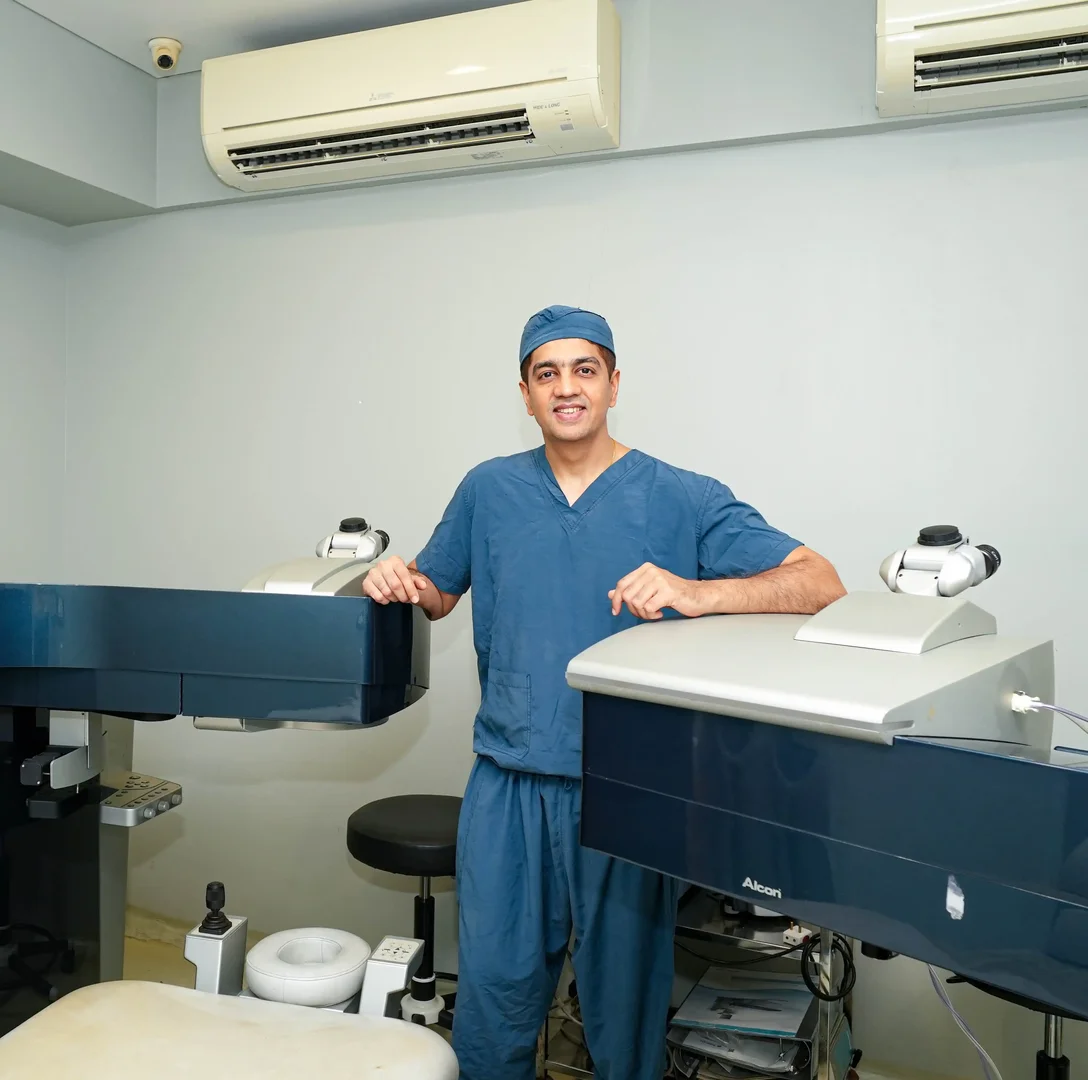
Dr. Nikhil Nasta is the Founder & Lead Surgeon at iSight Eye Care. With over two decades of experience, he specializes in advanced cataract surgery and comprehensive eye care, dedicated to restoring vision and improving patients' quality of life.

Frequently Asked Questions

Yes. Pediatric-aware doctors use picture or LEA-symbol charts, retinoscopy and other objective tests. Infants who cannot speak still get a meaningful exam.

Dr. Nikhil Nasta – Ophthalmologist, iSight Eye Care Mumbai
Schedule a visit

Book an appointment with Dr. Nikhil Nasta

Khar & Dadar · NABH accredited

Disclaimer: This information is for educational purposes only. Individual cases vary; consult a specialist for personalized advice.